

A dishwasher is no longer simply a machine for washing plates and cutlery. Modern appliances can include advanced cleaning programs, flexible interior layouts, specialized drying systems, quiet motors, efficient water management, and design features intended to complement contemporary kitchens. These developments have created a broad range of higher-end models for homeowners who want additional functionality and refined design.
Luxury dishwashers generally occupy the upper end of the dishwasher market, where manufacturers may combine advanced technology, premium materials, quieter operation, flexible loading systems, and sophisticated controls. However, choosing an appliance in this category requires careful evaluation because a higher price does not automatically mean that every feature will be useful for every household.
What Makes a Dishwasher Luxury?
There is no single technical definition of a luxury dishwasher. The term generally describes an appliance positioned at the higher end of the market based on its construction, technology, performance, design, or combination of features.
Higher-end models may offer features such as:
- Low operating noise
- Adjustable and specialized racks
- Multiple spray zones
- Soil sensors
- Advanced filtration
- Specialized drying systems
- Stainless-steel interiors
- Multiple wash programs
- Custom panel options
- Integrated controls
- Enhanced water and energy management
The exact features vary between manufacturers and models. Therefore, buyers should examine technical specifications instead of assuming that every higher-priced dishwasher provides the same capabilities.
Why Does Dishwasher Noise Matter?
Noise is particularly relevant in modern open-plan kitchens. A dishwasher operating near a dining room, living area, or home office can become noticeable if its sound level is relatively high.
Dishwasher noise is commonly expressed in decibels, abbreviated as dB. In general, a lower dB rating indicates quieter operation. The actual perceived sound can still vary because kitchen surfaces, cabinetry, installation quality, and room acoustics affect how sound travels.
For households that run dishwashers overnight or while people are working nearby, quiet operation may be a particularly valuable feature.
When comparing models, consumers should check the manufacturer’s stated noise rating rather than relying only on terms such as “quiet.”
How Does Capacity Affect Your Choice?
A dishwasher’s capacity should match the household’s typical washing requirements. A family that prepares several meals at home each day may generate substantially more dishes than a couple that eats out frequently.
Manufacturers commonly use place settings to indicate capacity. However, capacity is also influenced by the interior rack arrangement.
A well-designed rack system can make it easier to accommodate large plates, cookware, glasses, bowls, and utensils. Adjustable racks and fold-down tines can provide greater flexibility when washing unusual or oversized items.
Before purchasing, consider how often the dishwasher will be operated and whether the interior can accommodate the dishes used most frequently.
What Are the Benefits of Adjustable Racks?
Interior flexibility can make a significant difference in everyday use.
An adjustable upper rack can provide additional clearance for tall items in either the upper or lower section. Fold-down tines can make it easier to accommodate pots, pans, or larger dishes.
Some higher-end models also include third racks for cutlery and small utensils. This can free up space in the main racks and make loading more organized.
The best configuration depends on the household’s dishware. A dishwasher designed primarily for plates and glasses may have different loading priorities from one regularly used for cookware and baking equipment.
Which Wash Programs Are Most Useful?
Modern dishwashers can offer several programs designed for different cleaning requirements.
A normal cycle is generally intended for everyday loads, while intensive programs can be used for heavily soiled cookware. Quick cycles may be useful for lightly soiled dishes when a shorter washing time is desirable.
Other available programs can include eco, delicate, rinse, and automatic cycles.
Sensor-based programs can detect factors such as soil levels and adjust elements of the cycle. The exact technology differs by manufacturer, so buyers should consult the product specifications for details.
Having numerous programs can be convenient, but the most useful appliance is the one whose available cycles correspond to actual household needs.
How Important Is Drying Technology?
Cleaning is only part of a dishwasher’s function. Drying performance affects whether dishes are ready to store or use immediately after a cycle.
Different models may use heated drying, condensation drying, ventilation, or automatic door-opening systems. Each approach has different characteristics in terms of energy use, drying performance, and cycle duration.
Plastic containers can be more difficult to dry because they retain less heat than ceramic or metal items. Households that regularly wash plastic food containers should therefore pay particular attention to the drying system.
What About Energy and Water Efficiency?
A dishwasher’s operating cost depends partly on its energy and water consumption. Cycle selection, household usage, load size, and appliance design all influence resource use.
The U.S. Environmental Protection Agency’s ENERGY STAR program states that certified dishwashers use less energy and water than standard models meeting federal minimum efficiency standards. It also identifies technologies such as soil sensors as tools that can help optimize resource use during washing.
Buyers should check the current energy label and manufacturer specifications for the exact appliance rather than assuming that an expensive dishwasher will automatically be more efficient.
Long-term operating costs can be an important part of the overall value calculation.
Should You Choose a Built-In or Integrated Dishwasher?
Installation style affects both appearance and kitchen planning.
Built-in dishwashers are installed beneath the countertop and typically connect directly to the kitchen’s water, drainage, and electrical systems.
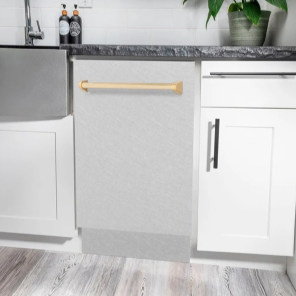
Integrated or panel-ready models can be fitted with a cabinet front, allowing the dishwasher to blend more closely with surrounding cabinetry. This can create a continuous appearance across the kitchen.
The appropriate choice depends on the cabinet design, available space, renovation plans, and desired visual style.
What Should You Measure Before Buying?
Accurate measurements are essential. A dishwasher needs to fit not only within the designated opening but also within the surrounding clearance requirements.
Measure:
- Width
- Height
- Depth
- Door-opening clearance
- Adjacent cabinet positions
- Water supply location
- Drain connection
- Electrical outlet location
The dishwasher door should be able to open fully without striking an island, cabinet, or other appliance.
Large appliances can also present delivery challenges, so homeowners should check doorways, hallways, elevators, and stairways before ordering.
Are Premium Dishwashers Worth the Investment?
The term premium dishwashers generally refers to models that provide additional features, improved materials, advanced technology, or more sophisticated design compared with basic appliances.
Whether the additional cost is worthwhile depends on the buyer’s priorities.
For example, a household with an open-plan kitchen may place significant value on quiet operation. A large family may prioritize capacity and rack flexibility, while someone renovating a designer kitchen may care more about integrated installation and coordinated finishes.
The important question is not simply whether a dishwasher is premium but whether its specific features solve real household requirements.
How Should You Compare a Dishwasher for Sale?
When evaluating a dishwasher for sale, buyers should consider the total ownership cost rather than the initial price alone.
Important factors include:
- Purchase price
- Installation expenses
- Energy consumption
- Water consumption
- Detergent requirements
- Warranty coverage
- Service availability
- Replacement parts
- Expected maintenance
A model with a higher purchase price could potentially provide better value if its features, efficiency, construction, and warranty are appropriate for long-term use.
Conversely, paying more for features that are rarely used may not provide meaningful value.
What Maintenance Does a Dishwasher Need?
Routine maintenance can help maintain cleaning performance.
The filter should be cleaned according to the manufacturer’s instructions, while spray arms should be checked for blocked openings. Door seals can also accumulate food residue and should be cleaned periodically.
Correct loading is equally important. Dishes should not block spray arms, and the dishwasher should not be overloaded.
Users should follow detergent instructions and avoid washing items that the manufacturer identifies as unsuitable for dishwasher use.
Conclusion
Luxury dishwashers can combine advanced cleaning technologies, flexible interiors, quiet operation, specialized drying systems, and refined designs. However, the best model depends on the kitchen’s dimensions, household size, cooking habits, preferred features, and installation requirements. When comparing premium dishwashers, buyers should examine measurable specifications such as noise level, capacity, energy consumption, water use, rack configuration, wash programs, drying technology, and warranty coverage. These details provide a more reliable basis for comparison than price or appearance alone. Anyone researching a dishwasher for sale should also verify the exact dimensions, installation requirements, operating costs, and after-sales support before purchasing. A carefully selected dishwasher should fit the kitchen physically and provide useful functionality throughout its expected service life.