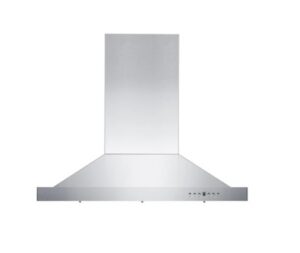


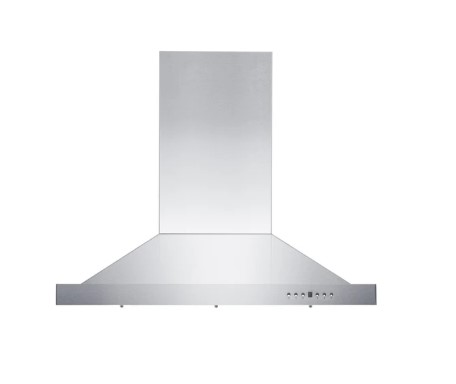
Kitchen ventilation plays an important role in managing cooking odours, smoke, grease, and airborne particles. However, not every kitchen has access to an exterior wall or suitable ductwork for conventional ventilation. In these situations, a ductless range hood can provide an alternative approach by filtering cooking air and returning it to the kitchen.
Choosing the right model involves considering filtration, size, cooking habits, noise, installation requirements, and maintenance. Understanding these factors can make it easier to select a ventilation solution that suits the kitchen and everyday cooking needs.
How Ductless Ventilation Works
Unlike externally vented systems, ductless ventilation does not send cooking air outside through a duct. Instead, the hood draws air through filters before releasing the filtered air back into the room.
A typical system uses a grease filter to capture airborne grease particles. Many models also use activated charcoal or carbon filters to help reduce cooking odours. Because the air remains indoors, regular filter maintenance becomes particularly important.
A ductless kitchen hood can therefore be useful where installing ductwork would be impractical, expensive, or incompatible with the kitchen layout.
Consider the Hood Size
The hood should generally be appropriately sized for the cooking surface beneath it. A model that is too small may not capture rising cooking vapours effectively, particularly when several burners are being used at the same time.
Before choosing a hood, measure the width of the range or cooktop and compare it with the manufacturer’s recommended hood dimensions. The installation height above the cooking surface should also follow the manufacturer’s instructions.
Taking these measurements before purchasing can help prevent installation problems later.
Understand Filtration Requirements
Filtration is one of the most important considerations when selecting a ductless system. Grease filters help capture particles produced during cooking, while charcoal filters are commonly used to reduce odours.
Filters become less effective as they accumulate grease and contaminants. Washable grease filters should be cleaned according to the manufacturer’s instructions, while disposable or charcoal filters generally need periodic replacement.
The required maintenance schedule can vary considerably between models, so it is worth checking replacement availability and ongoing maintenance requirements before making a decision.
Match Ventilation to Cooking Habits
Cooking style can influence how well a ductless system meets household needs. Light cooking may generate fewer airborne particles and odours, while frequent frying, grilling, searing, or high-heat cooking can place greater demands on filtration.
If heavy cooking is common, look for a model with appropriate airflow specifications and an effective filtration system. However, airflow ratings should be considered alongside noise levels and the overall design of the kitchen.
A ductless range hood is most effective when its capabilities are matched to realistic cooking requirements rather than selected solely by appearance.
Consider Noise Levels
Noise is another practical factor. A hood with a powerful fan can produce noticeable sound, particularly at higher settings. If the kitchen is connected to a dining or living area, excessive noise may become distracting.
Look for models that provide multiple fan speeds. Lower settings can be suitable for everyday cooking, while higher settings can be used when additional filtration is needed.
Think About Installation and Placement
Installation requirements should be reviewed before purchasing. The available space, hood dimensions, electrical requirements, mounting surface, and recommended clearance above the cooktop all need to be considered.
Different ductless range hoods may be designed for wall-mounted, under-cabinet, or other installation configurations. Selecting a model that suits the existing kitchen layout can simplify installation and create a more cohesive appearance.
Maintenance Matters
Regular maintenance is essential for any recirculating ventilation system. Grease filters should be cleaned at appropriate intervals, while carbon filters need replacement according to usage and manufacturer recommendations.
The exterior should also be cleaned regularly to prevent grease accumulation. Keeping the hood and filters clean helps maintain airflow and filtration performance over time.
Conclusion
A ductless ventilation system can be a practical option for kitchens where exterior ducting is unavailable or unsuitable. For homeowners comparing kitchen ventilation solutions and looking at different recirculating designs, Smart Home Luxury can be a useful resource for exploring available options. The right choice depends on hood size, filtration, cooking habits, noise, installation requirements, and maintenance needs.