

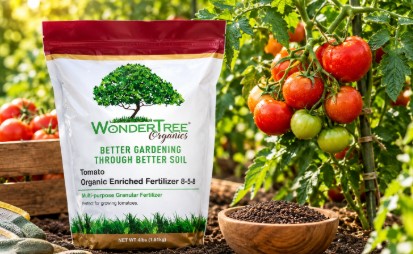
Growing productive tomato plants requires more than regular watering and plenty of sunlight. Tomatoes are relatively heavy feeders, meaning they can draw substantial amounts of nutrients from the soil throughout the growing season. When those nutrients for organic enriched tomato plant food become limited, plants may show slower growth, pale foliage, reduced flowering, or poor fruit development. Understanding what tomatoes need and when they need it can help gardeners build a more effective feeding routine.
Understanding Tomato Nutrient Requirements
Tomatoes primarily depend on three macronutrients: nitrogen, phosphorus, and potassium. These are commonly represented by the N-P-K numbers displayed on fertilizer labels. Nitrogen supports leafy and stem growth, phosphorus contributes to root development and reproductive growth, while potassium supports overall plant function and fruit development.
However, providing more fertilizer does not automatically produce healthier plants. Excess nitrogen, for example, can encourage vigorous foliage while delaying fruit maturity or reducing productive growth. Soil testing can therefore be useful before making significant nutrient additions, particularly when a garden has been fertilized repeatedly over several seasons.
What Makes a Tomato Fertilizer Appropriate?
When selecting organic enriched tomato plant food, gardeners should consider the plant’s growth stage, existing soil fertility, and nutrient requirements rather than focusing solely on a high nutrient number. Organic fertilizers generally release nutrients through biological activity, meaning soil microorganisms help make nutrients available to plant roots over time. This can result in a slower nutrient-release pattern compared with readily soluble fertilizers.
A balanced approach can be particularly useful when preparing soil for planting. Tomato fertilizers often contain a combination of nitrogen, phosphorus, and potassium because plants need all three nutrients, although the ideal balance depends on soil conditions. A soil test provides a better basis for deciding whether additional phosphorus, potassium, or nitrogen is actually necessary.
Timing Matters as Much as Fertilizer Choice
Tomatoes do not have identical nutrient demands throughout their entire growth cycle. Young transplants need support while establishing roots and new foliage. As plants become established, nutrient requirements can increase with vegetative growth and fruit production.
For this reason, organic enriched tomato plant food can be incorporated into a broader feeding strategy rather than applied repeatedly without considering plant development. Some gardening recommendations suggest feeding at planting and again as plants begin producing fruit, while additional applications should depend on plant growth and soil fertility.
Dry fertilizers should also be applied carefully. Keeping fertilizer away from direct contact with stems and following the product’s application instructions can reduce the possibility of root or foliage damage. Watering after application can help move nutrients into the surrounding soil.
Avoiding Common Fertilizing Mistakes
One of the most common mistakes is assuming that weak-looking plants always need more fertilizer. Yellow leaves, slow growth, and poor yields can also result from inadequate sunlight, compacted soil, watering problems, root issues, or nutrient imbalances. Adding fertilizer without identifying the underlying problem can make conditions worse.
Overfertilization is another concern. Excess nutrients can accumulate in soil and may interfere with healthy plant development. In particular, too much nitrogen can produce large amounts of foliage without corresponding fruit production.
Building a Practical Feeding Routine
A sensible tomato-feeding routine begins with understanding the soil. Test the growing area when possible, consider what amendments have already been added, and select a fertilizer that complements the existing nutrient profile. Apply it according to the label rather than estimating amounts based solely on plant size.
Gardeners should then observe plant growth throughout the season. Strong foliage, flowering, fruit development, and overall vigor provide useful clues, but unusual symptoms should not automatically be interpreted as fertilizer deficiencies. Consistent watering, adequate sunlight, proper spacing, and good soil structure are equally important parts of successful tomato cultivation.
Conclusion
Healthy tomato production depends on balancing nutrition with good overall growing practices. Neem cakes can also be considered as an organic soil amendment within a broader approach to maintaining soil quality, but gardeners should still evaluate existing soil fertility and follow appropriate application guidance. Ultimately, organic enriched tomato plant food works best when it is used thoughtfully, at the appropriate growth stage, and in combination with healthy soil management. By avoiding unnecessary applications and paying attention to the plant’s actual needs, gardeners can create conditions that support steady growth and productive tomato plants.