

Maintaining a healthy pond takes more than routine cleaning; it requires consistent water movement to prevent stagnation and support aquatic life. Floating fountains for ponds have become a go-to solution for addressing this need, offering a practical way to improve water quality without the complexity of permanent installations. From backyard ponds to larger commercial water features, these systems are increasingly favored for their combination of function and visual appeal.
The Mechanics Behind the Movement
At their core, floating fountains for ponds operate using a submersible pump housed within a buoyant float. The pump draws water from below the surface and pushes it upward through a nozzle, producing a spray pattern that falls back into the pond. Because the entire unit floats freely rather than sitting on a fixed base, it can adjust naturally to changes in water level and doesn’t require excavation or plumbing work, making it a far less invasive option than traditional fountain systems.
Supporting Oxygen Levels
One of the most important functions these systems serve is aeration. When water is sprayed into the air, it absorbs oxygen before returning to the pond, which raises dissolved oxygen levels throughout the water column. This becomes especially critical during hot weather, when warm water naturally holds less oxygen and fish or other aquatic organisms can become stressed. Ponds that rely solely on natural air exposure at the surface often struggle to maintain adequate oxygen levels, particularly in deeper or densely stocked ponds.
Reducing Algae and Stagnation
Standing water creates ideal conditions for algae growth, largely because nutrients settle and concentrate in areas with little to no circulation. By keeping water in constant motion, floating fountains for ponds disrupt this stagnation and make it harder for algae colonies to establish themselves. This doesn’t replace proper pond management practices, but it significantly reduces the conditions that allow algae blooms to take hold in the first place.
Matching Fountain Size to Pond Needs
Not every pond requires the same fountain setup. Pump horsepower should generally correspond to the pond’s surface area and total volume, since an undersized unit won’t circulate water effectively across the entire pond, while an oversized one may waste energy without added benefit. Spray height and pattern also vary by model; some create a focused, vertical plume, while others disperse water in a wider, layered pattern. Property owners should also consider wind exposure, as taller sprays can lose more water to drift in open areas.
Adding Illumination for Nighttime Appeal
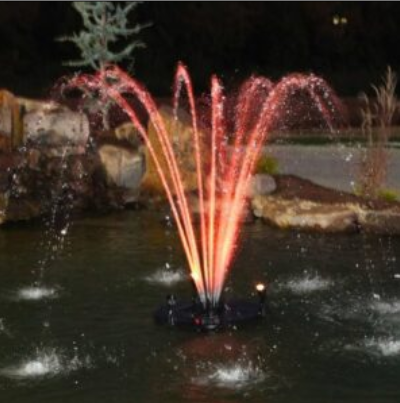
For pond owners who want their water feature to remain visible after dark, many opt to pair their setup with water fountain LED lights. These lighting kits are typically mounted at the base of the float and shine upward through the spray, creating a glowing effect that’s visible from a distance. LED options are generally preferred for their low energy draw and long lifespan, and many kits offer adjustable color settings for added customization.
Keeping the System Running Smoothly
Like any mechanical component exposed to outdoor conditions, floating fountains require periodic maintenance. Debris such as leaves and algae can accumulate around the intake screen, restricting water flow if left unchecked. The float itself should also be inspected occasionally, since prolonged algae buildup can affect buoyancy over time. In colder climates, removing the fountain before winter helps prevent ice formation from damaging internal components, and reinstalling it in spring typically requires only a basic inspection beforehand.
Conclusion
Pairing a pond fountain with water fountain LED lights extends its usefulness well beyond daylight hours, turning a functional feature into a year-round visual centerpiece. Beyond aesthetics, though, the consistent aeration and circulation these systems provide play a real role in supporting pond health, from oxygen levels to algae prevention. For anyone managing a pond, understanding how these systems work makes it far easier to choose the right setup for long-term results.