

Industrial packaging operations must balance speed, consistency, product protection, and efficient use of labor and materials. As production volumes increase, manually wrapping products can become difficult to scale while maintaining consistent package quality. Automated and semi-automated wrapping systems provide an alternative by integrating film handling, sealing, product grouping, and shrinking into a controlled process.
A shrink wrap machine industrial system can be configured for different products and production environments, depending on factors such as package dimensions, film type, required throughput, and automation level. Understanding how these systems work and what specifications matter can help manufacturers evaluate packaging equipment more effectively.
How Does Industrial Shrink Wrapping Work?
The process begins with positioning or grouping the product. Film is then introduced around the product or product group before a sealing mechanism creates the package enclosure.
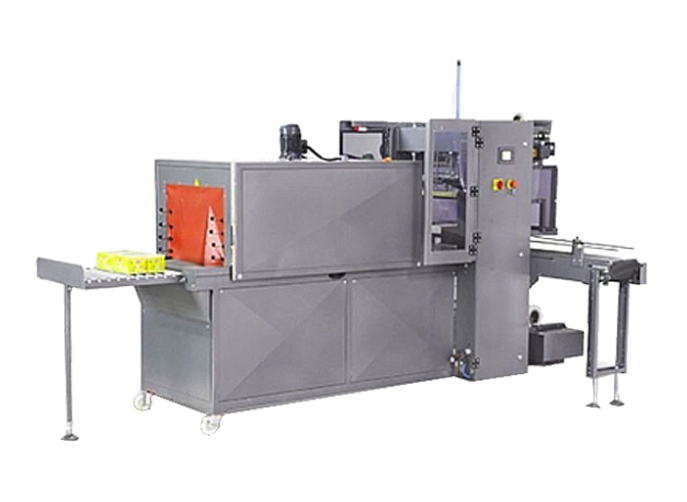
After sealing, heat is applied when the application requires shrinkage. A heat tunnel provides controlled heat that causes the film to contract around the product. The resulting package can hold multiple products together while providing a protective outer layer. A shrink wrap machine industrial system can help manufacturers create a more controlled packaging workflow when the equipment is properly matched to production requirements.
Some systems combine sealing and tunnel wrapping within a single automated process. For example, the MULTIMAC D is described by Maripak as an inline automatic combination sealer and tunnel wrapping system. Other systems provide automatic 90-degree feeding and product collation or continuous sleeve wrapping.
What Are the Main Types of Industrial Wrapping Systems?
Packaging requirements vary considerably, so industrial wrapping equipment is not limited to one machine configuration.
Sleeve wrappers surround products or product groups with polyethylene film and can be used for bundling applications. Manual sleeve systems provide operator involvement during product collation, while automatic versions can integrate more stages of the process.
Continuous wrapping systems are designed for production environments where products need to move through packaging with limited interruption. High-speed configurations can support demanding production schedules when properly matched with upstream and downstream equipment.
Combination systems can integrate sealing and tunnel wrapping into a coordinated line. This can reduce the need to move products manually between separate packaging stages.
Selecting among these options requires consideration of product dimensions, packaging format, throughput, and available floor space.
How Does Automation Affect Packaging Efficiency?
Automation can reduce repetitive manual tasks and create greater consistency between production cycles. However, machine speed should not be evaluated in isolation.
Actual throughput can depend on product size, film characteristics, feeding method, cycle time, changeover requirements, and downstream equipment. Maripak notes that production capacity should be evaluated according to the number of packages a machine can produce per hour and the requirements of the broader supply chain.
A shrink wrap machine industrial configuration can therefore be valuable when its operating speed is appropriately matched to the rest of the production line. If an upstream feeder or downstream conveyor cannot maintain the same pace, increasing the wrapper’s maximum speed may not increase overall production.
What Role Does Maintenance and Technical Support Play?
Packaging equipment operates as part of a larger production system, so unexpected downtime can affect more than the wrapping stage. Preventive maintenance, replacement parts, troubleshooting, and operator training can therefore influence long-term equipment availability.
Installation should also be considered before purchasing. Complex automated systems may require equipment positioning, electrical connections, conveyor integration, and configuration of operating parameters.
Maripak states that its support services include virtual installation assistance, technical support, parts services, maintenance, and operator training.
Conclusion
Industrial shrink wrapping involves much more than placing film around a product. Machine configuration, film compatibility, sealing method, product dimensions, feeding, automation, throughput, maintenance, and integration all contribute to packaging performance. Careful evaluation of current output and future capacity can also help businesses select an appropriate level of automation. For organizations researching industrial PE wrapping systems, Maripak USA provides equipment and technical resources covering manual, automatic, continuous, and high-speed packaging configurations.