


Missing teeth can affect more than the appearance of a smile. Gaps may influence chewing, speech, bite balance, and the position of neighboring teeth. Dental bridges are one restorative option used to replace missing teeth by creating a fixed restoration that spans the space. The suitability of a bridge depends on factors such as the condition of surrounding teeth, gum health, available support, bite forces, and the location of the missing tooth. For people researching bridge dental in Windsor, understanding how bridges work and what the treatment involves can help them have a more informed discussion with a dental professional.
What Is a Dental Bridge?
A bridge dental in Windsor is a fixed dental restoration designed to replace one or more missing teeth. Unlike a removable denture, a conventional fixed bridge is secured to supporting teeth or other dental structures and remains in place during normal daily activities.
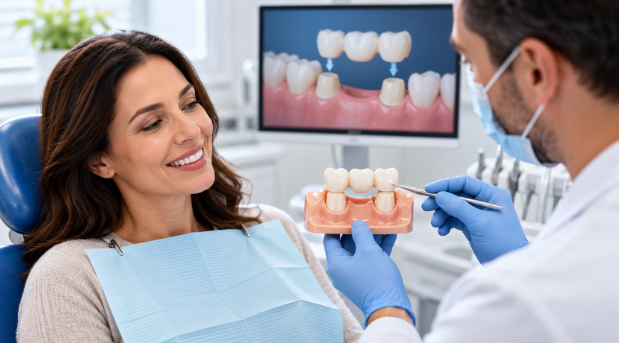
A traditional bridge generally includes artificial replacement teeth, known as pontics, supported by crowns placed over prepared neighboring teeth. The exact design depends on the location of the missing tooth and the condition of the surrounding oral structures.
Bridges can restore part of the chewing surface while also helping maintain the spacing between remaining teeth. Without replacement, neighboring teeth can sometimes shift toward an empty space, potentially affecting bite relationships and making oral hygiene more difficult.
When Might a Dental Bridge Be Considered?
A bridge dental in Windsor may be considered when a tooth has been lost, and there are suitable supporting structures available. The dentist first evaluates the teeth surrounding the gap, the gums, bone support, bite, and overall oral health.
The condition of adjacent teeth is particularly important for conventional bridges because they may need to provide support for the restoration. If the neighboring teeth are significantly weakened or affected by extensive decay, another tooth-replacement approach may be more appropriate.
Dental implants can provide another option for replacing missing teeth. Implant-supported restorations use an implant placed in the jawbone as an artificial tooth root, allowing a crown or bridge to be supported without relying on neighboring natural teeth in the same way as a conventional bridge.
How Is a Dental Bridge Placed?
The treatment process generally begins with an examination and diagnostic assessment. Dental X-rays may be used to evaluate tooth roots and surrounding bone, while bite analysis can help identify areas where excessive contact or uneven forces may affect the restoration.
For a conventional bridge, the supporting teeth may need to be reshaped to create adequate space for the restoration. The amount of preparation can vary according to the selected material and the clinical requirements of the tooth.
After preparation, impressions or digital scans can be taken to create an accurate model of the mouth. This information helps guide the design and fabrication of the bridge.
A temporary restoration may be placed while the permanent bridge is being fabricated. It can protect the prepared area and help maintain function during this period.
Once the final bridge is ready, its fit, appearance, and bite are evaluated before permanent cementation. Minor adjustments may be made to ensure that the restoration contacts the opposing teeth appropriately.
Materials Used for Dental Bridges
Dental bridges can be made from different materials depending on their location, strength requirements, appearance, and individual clinical circumstances.
Ceramic materials can provide a tooth-colored appearance and may be selected when aesthetics are particularly important. Other restorations may use metal or combinations of metal and ceramic when additional structural considerations apply.
The appropriate material is not necessarily the same for every patient. Factors such as chewing forces, the position of the missing tooth, available space, and the condition of supporting teeth should be assessed before selecting a restoration.
Benefits of Replacing a Missing Tooth
Replacing a missing tooth can help restore chewing function and maintain the arrangement of the remaining teeth. A fixed bridge can also help fill a visible gap and provide a more continuous chewing surface.
Another consideration is tooth movement. A gap can allow nearby teeth to migrate toward the empty space over time. A properly designed restoration can help maintain the intended spacing and contribute to a more stable bite.
However, a bridge does not eliminate the need for preventive dental care. The supporting teeth and surrounding gums still require regular cleaning and professional monitoring.
Caring for a Dental Bridge
Good oral hygiene is important after receiving a bridge. Brushing twice daily with fluoride toothpaste and cleaning around the restoration can help reduce plaque accumulation. Special attention should be given to the area beneath the artificial tooth, where food particles and plaque can collect.
Floss threaders, interdental brushes, or other cleaning aids may be recommended depending on the bridge design and the patient’s ability to access the area.
Regular dental examinations are also important. During these appointments, the dentist can check the condition of the restoration, supporting teeth, gums, and bite. Routine examinations may identify developing problems before they become more difficult to manage.
What to Expect After Bridge Placement
It is normal for the mouth to require some time to adjust after a new restoration is placed. The restored area may initially feel different during chewing or when the tongue contacts the bridge.
The bite can also feel unfamiliar because the shape and distribution of contact between the teeth have changed. In many cases, this sensation decreases as the mouth adapts to the restoration. If the bite continues to feel uneven or uncomfortable, a dental professional should evaluate the restoration and make any necessary adjustments.
Conclusion
Dental bridges can provide a fixed approach to replacing missing teeth while helping restore chewing function, maintain spacing, and support a more complete smile. The right treatment depends on factors such as the health of neighboring teeth, gum condition, bone support, bite forces, restoration material, and the location of the missing tooth. A thorough examination is therefore essential before choosing a treatment. Consulting a Windsor dentist can help determine whether a conventional bridge, implant-supported restoration, or another tooth-replacement option is appropriate for an individual’s oral health needs.