

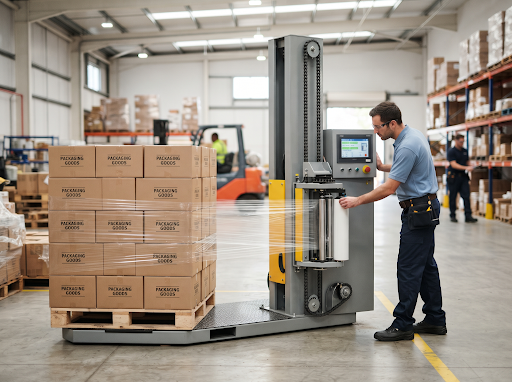
A pallet wrapper rarely fails at a convenient moment. It usually stops when trucks are waiting, orders are stacked, and the supervisor needs loads secured in minutes. Unstable loads, wasted film, and unexpected downtime all cost money, and many of those problems trace back to small issues that are easy to miss on a busy day. A methodical approach to Highlight Industries pallet wrapper troubleshooting helps maintenance teams find the real cause instead of replacing parts by guesswork. Stretch wrappers combine a turntable or rotating arm, a film carriage, rollers, sensors, a drive system, and a control panel, and a fault in any one of them can look like a much bigger failure. This article explains how to organize a basic diagnostic routine, which symptoms point to which components, and how to keep the machine reliable, so operators can solve routine issues safely and know when to call for expert help.
Reading the Symptoms Before Touching Any Part
Start with observation. Note what the machine is doing, when the problem began, and whether it happens on every cycle or only now and then. Safety comes first, so lock out power before reaching into the carriage, turntable, or film path. Film problems are the most common complaint. If the film tears, check the roll for damage, confirm it is loaded in the correct direction, and look for burrs or debris on the rollers. Uneven stretch often points to worn, dirty, or sticky rollers, or to a tension setting that does not match the film gauge. If the carriage does not travel smoothly, inspect the chain, belt, or lift drive for slack, dryness, or obstruction. When the turntable jerks or stops, look for a worn drive component, loose fasteners, or debris under the platform. Sensors deserve attention too, because dirty photo eyes, misaligned reflectors, or loose wiring can make the wrapper behave as if no load is present. Disciplined Highlight Industries pallet wrapper troubleshooting records each symptom and fix, building a log that shortens future repairs.
Component Checks That Solve Most Common Faults
Once symptoms narrow the field, test components one at a time. Film rollers come first, because they guide and stretch the film on every revolution. Spin each roller by hand, listening for roughness and feeling for wobble, and replace any that bind, wear unevenly, or have a glazed surface. Bearings, shafts, and mounting hardware should be checked for play. Next, inspect the film carriage for loose bolts, cracked brackets, and worn guides. Drive belts and chains should have the tension given in the operator manual, with no cracked or stretched sections. Control issues call for a different approach. Check fuses, breakers, emergency stop circuits, limit switches, and connectors before suspecting a circuit board, and read any fault codes on the display, matching them against the manual. Review the settings as well, since wrap force, rotation speed, and the number of top and bottom wraps can be changed accidentally, and returning to known values sometimes clears the problem. Careful Highlight Industries pallet wrapper troubleshooting avoids swapping several parts at once, because that hides which change actually fixed the issue.
Conclusion
Prevention removes most emergency calls. Clean rollers, sensors, and the film path at the start of each shift, because film residue and dust build up quickly. Lubricate chains, bearings, and moving parts on the maker’s schedule, and avoid over-greasing, which attracts dirt. Inspect rollers, belts, and fasteners weekly, and keep a short list of critical spares, such as rollers, belts, sensors, and fuses, so a small failure does not become a long stoppage. Train operators to load film correctly, set the right tension, and report unusual noise or film behavior early. When a replacement is needed, match part numbers and specifications carefully, and a supplier like Machine Parts Toolbox can help buyers identify components for industrial packaging equipment. Document every repair, review recurring faults, and compare film use before and after adjustments. Consistent Highlight Industries’ pallet wrapper troubleshooting turns scattered fixes into a dependable routine that protects loads, saves film, and limits downtime. Use the manual, work safely, and call a qualified technician when a problem goes beyond basic checks.