

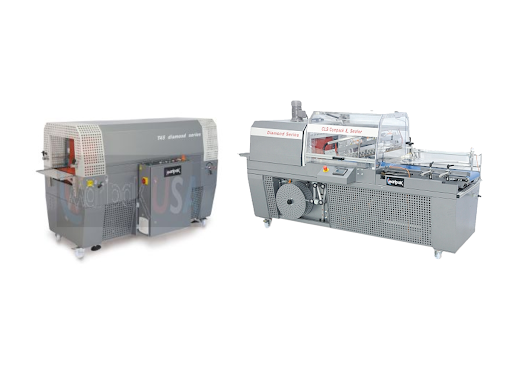
Shrink wrapping depends on controlled heat, consistent airflow, and predictable product movement. Once a product has been enclosed and sealed in shrink film, the tunnel determines how evenly that film contracts around the package. For manufacturers, distributors, and fulfillment operations, an efficient shrink tunnel machine can improve package appearance while helping a line maintain dependable throughput.
Efficiency, however, is not simply a matter of choosing the hottest or fastest tunnel available. Product dimensions, film type, chamber design, conveyor speed, insulation, airflow, and upstream sealing all influence performance. Understanding these factors makes it easier to select and operate equipment effectively.
Uniform Heat Is the Foundation of Good Shrink
Shrink film needs controlled and consistent heat to contract properly.
If temperatures vary considerably across the chamber, one side of a package may shrink more quickly than another. This can create wrinkles, loose sections, distorted corners, or other visual defects.
A well-configured shrink tunnel machine should therefore maintain predictable heat conditions as packages move through the chamber.
Current Diamond Series equipment, for example, is designed around consistent heat levels and precise temperature control for automatic shrink applications.
Operators still need to identify suitable settings for each combination of product and film.
Airflow Determines Where the Heat Goes
Temperature alone does not guarantee good results.
Heated air must circulate effectively around the package so that the film receives adequate exposure on the top, sides, corners, and lower surfaces.
Different tunnel designs manage air movement in different ways. The Diamond Series is described as using bottom-circulated airflow, while other tunnel configurations may use different circulation arrangements.
For a shrink tunnel machine, airflow becomes particularly important when handling irregularly shaped products or packages with varying heights.
Good circulation can help reduce areas where film remains loose despite an apparently correct temperature setting.
Conveyor Speed Controls Heat Exposure
The conveyor determines how long each package remains inside the heated chamber.
This exposure period, often called dwell time, needs to match both film characteristics and tunnel temperature.
If the conveyor moves too quickly, the film may leave the tunnel before shrinking sufficiently. If it runs too slowly, prolonged heat exposure can produce excessive shrink or affect heat-sensitive products.
An efficient shrink tunnel machine therefore requires a balance between:
- Conveyor speed
- Chamber temperature
- Product dimensions
- Film type
- Desired shrink finish
The correct combination should be established through testing rather than assuming one speed will work for every SKU.
Tunnel Dimensions Should Match the Product Range
Bigger equipment does not automatically provide better packaging.
The chamber should be sized around the actual products that will pass through it. Important measurements include tunnel width, usable height, chamber length, and conveyor dimensions.
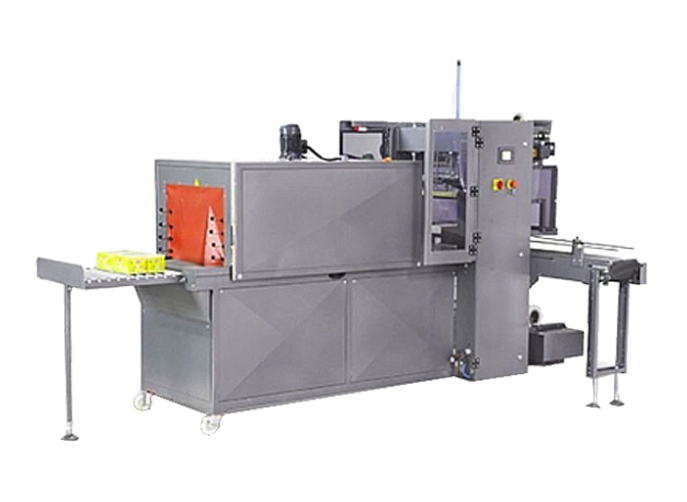
Current Diamond Series product ranges include multiple configurations and sizes, including standard T models, extended-length EL versions, and double-chamber DC options designed for different packaging requirements.
When choosing a shrink tunnel machine, companies should consider both today’s package dimensions and realistic future product changes.
Equipment that is too small can restrict growth, while excessive capacity may add unnecessary space and operating demands.
Film Selection Changes Machine Settings
Different shrink films respond differently to heat.
Polyolefin and polyethylene films, for example, can require different combinations of temperature, airflow, and conveyor speed. Gauge and formulation may also change the way the material shrinks.
This means operators should not expect one shrink tunnel machine setting to work equally well with every film.
Whenever film changes, testing should confirm:
- Appropriate tunnel temperature
- Conveyor speed
- Finished appearance
- Seal integrity
- Film tension
- Product tolerance to heat
Recording proven combinations for recurring products can simplify future setup and reduce production trial and error.
The Sealer and Tunnel Must Work Together
A shrink tunnel cannot correct a poor seal.
Before entering the tunnel, film needs to be securely closed around the product. If the seal is weak, the shrinking force generated inside the chamber may pull the seam apart.
The sealer and shrink tunnel machine should therefore be treated as one connected packaging process.
Maripak’s own product information notes that estimated system performance depends partly on sealer speed, product size, film type, and the equipment used for feeding products into the tunnel.
This illustrates why line balance is more useful than evaluating each machine independently.
Longer Products May Need Extended Exposure
Some packages require more time in controlled heat.
Longer goods, larger packages, or particular film configurations may benefit from an extended tunnel chamber rather than simply increasing temperature.
Extended-length tunnel configurations are designed to provide additional processing length while maintaining controlled shrinking conditions.
Using additional chamber length can sometimes provide more manageable heat exposure than forcing a shorter shrink tunnel machine to operate at more aggressive settings.
The appropriate approach depends on product dimensions and film behavior.
High-Volume Operations Need Balanced Capacity
Packaging speed should be evaluated across the full line.
A high-capacity tunnel has little benefit if upstream sealing cannot supply products quickly enough. Similarly, an extremely fast sealer can cause accumulation when tunnel capacity is lower.
For higher-volume environments, multi-chamber designs can provide additional processing capacity. The Diamond Series DC range, for example, uses a double-chamber configuration intended for increased production requirements.
An efficient shrink tunnel machine should therefore be sized according to realistic line throughput rather than its isolated maximum capacity.
Energy Efficiency Deserves Attention
Heat tunnels operate at elevated temperatures, which makes energy management an important part of operating costs.
Tunnel insulation, chamber size, warm-up time, operating temperature, production schedule, and heat retention can all influence energy consumption.
Running an oversized machine continuously for small packages may use more energy than necessary.
Production teams can improve efficiency by:
- Matching tunnel size to product requirements
- Minimizing unnecessary idle periods
- Maintaining insulation
- Using documented temperature settings
- Coordinating scheduled production runs
The goal is to provide enough heat for reliable shrinking without using more energy than the process requires.
Product Spacing Influences Shrink Quality
Products should enter a tunnel at consistent intervals.
Packages positioned too closely may restrict airflow or affect how heat circulates around adjacent items. Irregular spacing can also create inconsistent production flow.
A shrink tunnel machine works more predictably when its infeed system maintains stable product separation.
Sensors, automatic conveyors, or mechanical guides can help in automated operations. Semi-automatic lines may rely more heavily on operator procedures.
Either way, consistent feeding supports more repeatable tunnel performance.
Cooling Is Part of the Process
Film remains warm when it exits the heated chamber.
At this stage, aggressive handling, stacking, or compression can affect package appearance before the material has fully stabilized.
The discharge section should therefore provide sufficient space for cooling before packages move to labeling, case packing, or palletizing.
A complete shrink tunnel machine workflow should consider this post-tunnel stage rather than assuming shrink wrapping ends at the chamber exit.
For high-speed operations, discharge design can significantly influence how smoothly finished products move downstream.
Maintenance Protects Shrink Consistency
Even well-designed equipment can lose consistency without routine maintenance.
Components that may require inspection include:
- Conveyor systems
- Heating elements
- Fans
- Temperature sensors
- Electrical connections
- Airflow passages
- Controls
Film residue, mechanical wear, or failing components can gradually change package quality.
Operators should investigate sudden increases in wrinkles, loose film, or uneven shrink instead of compensating indefinitely with temperature adjustments.
Preventive maintenance helps a shrink tunnel machine remain predictable across long production runs.
Conclusion
An efficient shrink tunnel machine depends on more than maximum temperature or conveyor speed. Heat consistency, airflow, chamber dimensions, dwell time, film selection, product spacing, line integration, energy use, and maintenance all contribute to reliable shrink performance. Equipment ranges available through Maripak USA include standard, extended-length, and double-chamber tunnel configurations, illustrating how different production environments may require different approaches to heat exposure and throughput. The strongest packaging line is one in which the tunnel is matched carefully to the product, film, sealer, and required production rate. When those variables are balanced, shrink wrapping can become more consistent while reducing avoidable defects and bottlenecks.