
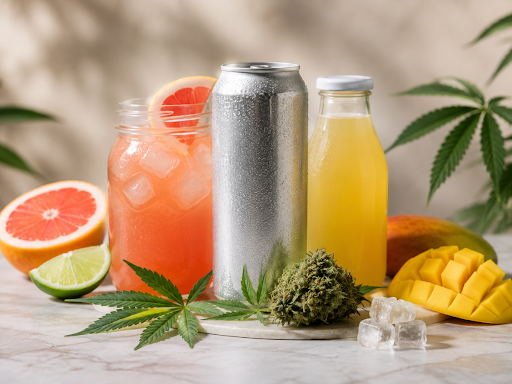
The beverage industry has expanded considerably, with cannabis-derived ingredients appearing in an increasing variety of consumer products. Among these are drinks containing tetrahydrocannabinol, commonly known as THC. Unlike traditional cannabis consumption methods, beverages offer a food-and-drink format that can be incorporated into social occasions or consumed without smoking.
THC infused drinks contain THC in a liquid formulation, meaning their effects are experienced through ingestion rather than inhalation. This distinction matters because orally consumed THC can have a delayed onset and longer-lasting effects. Understanding ingredients, serving sizes, labeling, storage, and local regulations is therefore important for adults considering these products.
What Are THC Infused Drinks?
THC infused drinks are beverages formulated with a measured amount of tetrahydrocannabinol. THC is the primary psychoactive compound in cannabis and can affect perception, coordination, mood, attention, and reaction time.
These beverages may include sparkling waters, sodas, teas, mocktail-style drinks, and other liquid formulations. Depending on the product, THC may be derived from cannabis or hemp.
The term “hemp-derived” refers to the source of the cannabinoid, not the absence of psychoactive effects. A product containing THC can still cause intoxication even when its cannabinoids originate from hemp. The CDC specifically notes that THC can be infused into drinks and that the effects depend on factors including THC concentration and the method of consumption.
How Do THC Drinks Affect the Body?
Because THC beverages are consumed orally, their effects generally do not appear immediately. The CDC reports that edible cannabis products, including food and drinks, can take approximately 30 minutes to 2 hours to produce noticeable intoxicating effects.
This delayed onset can create a risk of consuming more than intended. Someone may not feel an effect shortly after drinking a product and mistakenly assume that the serving was ineffective.
The experience can also vary according to body chemistry, previous cannabis exposure, the amount consumed, whether the person has eaten recently, and whether other substances are used at the same time.
How Long Do the Effects Last?
Orally consumed THC can produce effects that last longer than consumers may expect. The duration varies considerably between individuals and products.
The amount of THC is one important factor, but metabolism, food intake, tolerance, and other substances can influence the experience. The CDC notes that edible cannabis effects may last longer than expected and can be unpredictable.
Because of this variability, consumers should avoid assuming that a beverage will affect them in exactly the same way as a previous product.
Why Is THC Content Important?
The concentration of THC determines the potential intoxicating strength of a beverage. Consumers should examine the label carefully to understand the amount of THC per serving and, where applicable, the total amount contained in the package.
Serving information can be particularly important when a container contains multiple servings. Drinking an entire container without checking the serving size can result in substantially more THC consumption than intended.
The CDC also cautions that THC concentrations in edible products may sometimes be difficult to measure or may not accurately reflect the labeled amount.
Are Hemp-Derived Products Different From Cannabis Products?
The distinction between hemp-derived and marijuana-derived products is largely based on legal definitions and cannabinoid concentration rather than whether THC can cause intoxication.
Under the federal framework established by the 2018 Farm Bill, hemp was defined using a delta-9 THC threshold of no more than 0.3% on a dry-weight basis. However, federal rules are changing in 2026, with amendments scheduled to take effect later this year.
State laws can impose additional restrictions, including limits on THC concentration, testing, packaging, sales, and age requirements. Therefore, legality cannot be determined solely from the phrase “hemp-derived.”
Are THC Beverages Legal Everywhere?
No. Cannabis and hemp-derived THC products are subject to a complex combination of federal and state laws.
Some states permit specific categories of intoxicating hemp products under defined conditions, while others restrict or prohibit them. Regulations can also change over time.
For example, New Jersey has established specific requirements for intoxicating hemp beverages, including THC limits and testing requirements, while additional federal changes are scheduled to take effect in November 2026.
Consumers should check the laws applicable in their jurisdiction rather than assuming that a product legally sold in one state can be purchased, transported, or consumed under the same conditions elsewhere.
What Should You Look for on the Label?
A clear label can help consumers understand what they are purchasing. Important information may include:
- THC amount per serving
- Total THC per container
- Serving size
- Ingredient list
- Cannabinoid information
- Manufacturer information
- Recommended storage instructions
- Applicable warnings
- Testing or batch information where required
Consumers should be cautious with products that provide unclear dosing information or make unsupported health claims.
The FDA has emphasized that cannabis-derived compounds remain subject to federal food and drug regulations regardless of whether the material qualifies as hemp under the Farm Bill.
What Are the Main Safety Considerations?
THC can impair judgment, coordination, reaction time, and perception. Anyone experiencing intoxication should avoid driving or operating machinery.
Combining THC with alcohol or other substances can also increase impairment. The CDC identifies combining cannabis with other substances as a factor that may increase risk.
Another important consideration is accidental ingestion. THC beverages should be stored securely and kept away from children and pets. The FDA has warned that accidental consumption of THC-containing products by children can result in serious adverse effects.
Why Is Responsible Storage Important?
Because THC beverages can resemble ordinary soft drinks or other consumer beverages, accidental consumption is possible if products are stored carelessly.
Keeping them in their original packaging and storing them somewhere inaccessible to children can reduce the risk of accidental ingestion.
Consumers should also avoid transferring THC beverages into ordinary containers because doing so can remove important labeling and make the contents difficult to identify.
What Happens if Someone Consumes Too Much THC?
Taking too much THC can produce unpleasant or serious symptoms, including anxiety, confusion, paranoia, increased heart rate, nausea, vomiting, and impaired coordination. The CDC notes that severe reactions can sometimes result in unintentional injuries or require medical attention.
If someone experiences severe symptoms, significant confusion, difficulty breathing, loss of consciousness, or another medical emergency, immediate medical assistance should be sought.
Because THC beverages can have delayed effects, consuming additional amounts before the initial effects appear can increase the likelihood of overconsumption.
How Should Consumers Approach THC Beverages?
Adults who choose to consume these products should read the entire label, understand the serving size, account for the delayed onset of orally consumed THC, and avoid combining the product with alcohol or other intoxicating substances.
A THC infused drinks product should also be evaluated according to its stated cannabinoid content, ingredients, applicable regulations, and testing information rather than relying solely on marketing terminology.
Consumers should also understand that the legal status of these products can change rapidly. Federal and state regulations should be checked before purchasing, transporting, or consuming them.
Conclusion
THC infused drinks represent a different way of consuming THC, but their liquid format does not eliminate the intoxicating effects or potential risks associated with the cannabinoid. Delayed onset, variable duration, product labeling, dosage, and individual tolerance can all influence the experience. For consumers comparing hemp-derived THC edibles, it is important to distinguish the source of the THC from its effects and to understand that hemp-derived products can still be psychoactive. Checking current laws, reading labels carefully, storing products securely, and avoiding impaired driving are important parts of responsible consumption.