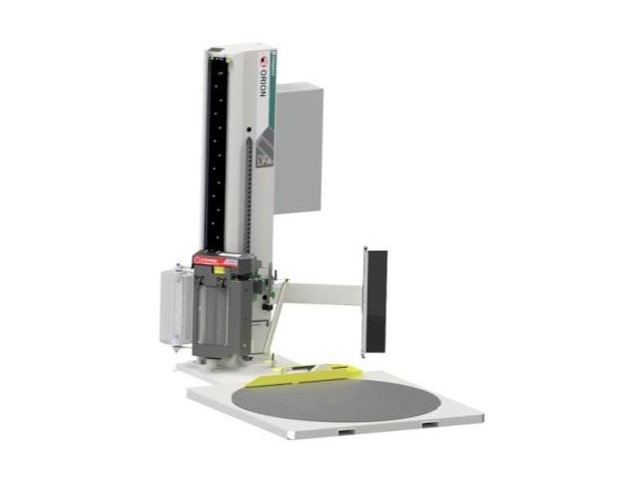


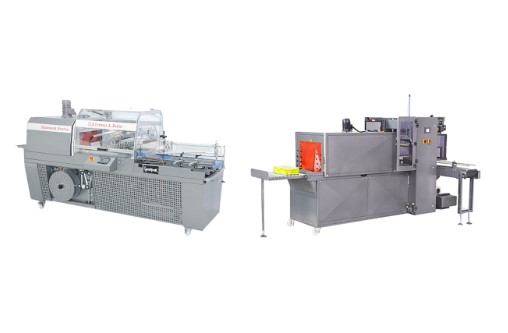
Modern packaging operations need equipment that can protect products while maintaining consistent quality and production speed. Shrink wrapping is widely used across manufacturing, retail, food, consumer goods, and distribution because heat-sensitive film can form a close-fitting layer around products or product groups. A shrink packaging machine can automate parts of this process, reducing repetitive manual work while improving consistency and throughput.
What Is a Shrink Packaging Machine?
A shrink packaging machine is equipment used to wrap products in heat-sensitive plastic film and create a tight package through controlled heating. Depending on the system, packaging may involve product positioning, film wrapping, sealing, and passage through a heat tunnel.
The basic process uses shrink film that contracts when exposed to controlled heat. A sealing machine first encloses the product in film, after which a heat tunnel or chamber applies the necessary heat. The film contracts around the product to create a secure outer layer.
Different machines are designed for different production requirements. Equipment may range from manual and semi-automatic systems for lower-volume operations to fully automatic machinery intended for continuous production.
How Does Shrink Packaging Work?
The shrink packaging process generally consists of several connected stages.
First, the product is positioned for wrapping. The machine feeds shrink film around the product before a sealing mechanism closes and cuts the film. The wrapped product then moves through a heated tunnel.
Inside the tunnel, controlled heat causes the film to contract. Temperature, airflow, conveyor speed, film characteristics, and package dimensions all affect the final result. If these variables are not properly matched, the package may develop wrinkles, loose areas, weak seals, or excessive shrinkage.
This is why a shrink packaging machine should be considered as part of a complete packaging system rather than as an isolated piece of equipment.
What Are the Main Types?
There are several types of shrink packaging equipment, with the most appropriate option depending on production volume and product requirements.
L-Sealer Systems
L-sealers use a sealing bar to close film around products before they enter a heat tunnel. They can be configured as semi-automatic or fully automatic systems and are commonly used for a broad range of packaged goods.
Side-Sealing Systems
Side sealers create a continuous longitudinal seal as products move through the machine. They can be useful for operations handling products with varying lengths and for production lines requiring continuous movement.
PE Bundling Systems
Polyethylene wrapping systems are designed for applications where multiple products need to be grouped and wrapped together. Industrial PE systems can include automatic sealing, tunnel wrapping, product collation, and bundling functions.
Heat Shrink Tunnels
A heat tunnel performs the heating stage after the product has been sealed in film. Tunnels are available in different configurations and sizes to accommodate different package dimensions and production speeds.
What Are Shrink Machines Used For?
A shrink packaging machine can be used for primary, secondary, or tertiary packaging applications depending on the product and packaging design. Individual retail products may be wrapped separately, while multiple units can be bundled into multipacks.
Shrink wrapping is also useful when products need additional protection during storage, handling, and transportation. The film can help keep products grouped together while providing an external barrier against certain environmental conditions.
Common applications include consumer goods, printed materials, household products, food and beverage packaging, industrial products, and retail multipacks. The appropriate equipment depends on product characteristics and the required packaging configuration.
What Are the Benefits of Automated Shrink Packaging?
Automation can provide several practical benefits when packaging volumes are high enough to justify the investment.
A shrink packaging machine can provide greater consistency because sealing and film application are controlled by defined machine settings. Automation can also reduce repetitive manual handling and help maintain a predictable production rhythm.
Other potential advantages include:
- Consistent film application
- Repeatable sealing
- Reduced manual packaging work
- Higher production throughput
- Better package presentation
- Easier integration with conveyors
- Greater suitability for continuous production
The actual results depend on the machine configuration, film type, product dimensions, operator practices, and overall production-line design.
How Do You Choose the Right Machine?
Choosing a shrink packaging machine requires evaluating the complete packaging requirement rather than simply comparing machine speeds.
Start by determining the product’s length, width, height, weight, and shape. Then establish the required number of packages per hour and whether production is expected to increase in the future.
Film selection is equally important. Different films have different thicknesses, shrink characteristics, strength, and temperature requirements. The sealing equipment and heat tunnel must be compatible with the selected film.
Businesses should also consider available floor space, electrical requirements, conveyor configuration, operator controls, maintenance access, and integration with existing equipment.
Manual, Semi-Automatic, or Fully Automatic?
Manual equipment can make sense for businesses with limited production volumes or frequent short production runs. Semi-automatic systems provide a middle ground by reducing some manual tasks while maintaining flexibility.
Fully automatic systems are generally more appropriate for higher-volume production where consistent throughput and reduced operator intervention are priorities. The right level of automation depends on production requirements, labor availability, product variation, and return on investment.
Manufacturers should also consider the complete line. A high-speed sealer may not improve overall output if products cannot be supplied quickly enough or the heat tunnel becomes a bottleneck.
Maintenance and Operating Considerations
Regular inspection and maintenance are important for maintaining consistent packaging quality. Operators should monitor sealing components, conveyors, heating elements, film paths, sensors, and control systems according to equipment requirements.
Film residue and debris should also be removed regularly because buildup can interfere with sealing or machine movement. Operators should monitor changes in package quality as potential indicators of incorrect temperature, film tension, conveyor speed, or equipment condition.
Proper training is another important consideration. Manufacturers commonly provide installation, setup, and training for their equipment, which can help operators understand machine controls and operating procedures.
Conclusion
A shrink packaging machine can improve packaging consistency, throughput, and efficiency when the equipment is properly matched to the products and production environment. Understanding the differences between L-sealers, side sealers, PE bundling systems, and heat tunnels makes it easier to determine which configuration fits a particular operation. Before investing, businesses should evaluate production volume, product dimensions, film specifications, automation requirements, available space, maintenance needs, and integration with existing packaging equipment. For businesses comparing industrial shrink packaging equipment, Maripak USA can be reviewed as one industry resource when researching different machine categories and packaging-system configurations. A balanced system is generally more valuable than choosing machinery based solely on maximum speed.