


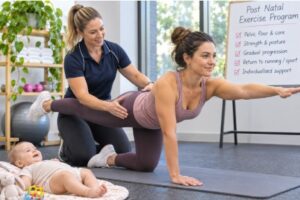
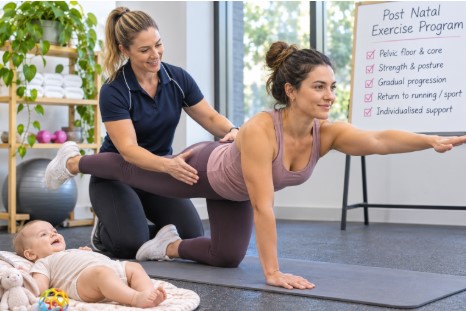
Recovery after birth is gradual, and most new mothers receive far less guidance on movement than they need. A well-structured post natal exercise program rebuilds strength, breathing, and confidence in stages rather than rushing back to old routines. This guide explains when to begin, how the stages typically progress, and which exercises and warning signs matter most.
Why Structured Recovery Matters
Pregnancy and birth change posture, abdominal wall tension, and pelvic floor function. Exercise after birth supports recovery of those areas along with energy levels and mood. Research reviews note that pelvic floor muscle training, with or without aerobic exercise, reduced the odds of urinary incontinence by about 37 percent in the postpartum period. A post natal exercise program fits the principle of gradual, individual progression because it replaces guesswork with a staged plan.
When to Start
Timing varies with birth type, complications, and how the body feels. Gentle walking, breathing, and pelvic floor activation can often begin within days if there is no increased pain. Medical clearance, commonly at the six-week check, comes before structured work. Many programs begin the main strength phase around 12 weeks, particularly after a caesarean birth, where scar healing and abdominal recovery take longer. Strenuous and high-impact activity is generally avoided for the first 12 weeks. A post natal exercise program should therefore start from clearance, not from a calendar date alone.
The Three Phases of Return
Phase One: Weeks 0 to 12
The early focus is on pelvic floor and deep core activation, breathing mechanics, gentle mobility, and daily function. A women’s health physiotherapist usually leads this stage, especially when there are tears, stitches, or complications.
Phase Two: Weeks 12 to 24
Once cleared, training moves to whole-body strength, posture correction, and low-impact cardio. Bodyweight work, resistance bands, and light weights rebuild the glutes, back, and upper body, which carry the load of lifting and carrying a baby. Functional patterns such as squatting, hinging, pushing, and carrying are practised because they mirror daily life. A post natal exercise program in this stage aims to build resilience and reduce injury risk.
Phase Three: Six Months and Beyond
Later work progresses stability and fitness toward higher-intensity training, running, or sport. Many women regain moderate fitness within three to six months, although full strength and performance can take longer. A return to running usually depends on passing basic checks, such as no urine leakage, no heaviness in the pelvis, and no pain.
Core and Pelvic Floor Work
Diastasis recti, the separation of the abdominal muscles along the midline, is common after pregnancy. Signs include a visible gap or bulge down the stomach. Conservative guidance suggests starting with diaphragmatic breathing, pelvic tilts, heel slides, and dead bugs, then progressing only when the abdomen stays flat during effort. Traditional crunches, sit-ups, and full planks are usually delayed. If a gap remains obvious several weeks after birth, a GP or physiotherapist can assess it. Any good post natal exercise program adjusts these drills to the individual.
Tracking Progress
Progress is more than a number of repetitions. Useful markers include:
- Smoother breathing and less breath-holding during effort.
- Better movement quality, such as squats or bridges without lower-back compensation.
- Fewer symptoms in a simple log of pelvic pain, back ache, or scar sensitivity.
- Improved sleep and recovery between sessions.
- Greater confidence, lower anxiety, and a steadier routine.
Warning Signs to Respect
Stop and seek advice if exercise brings on increased bleeding, pain, urinary leakage, a feeling of heaviness in the pelvis, or doming of the abdomen. Moderate exercise does not harm milk supply, though good hydration and nutrition support both recovery and breastfeeding.
Choosing the Right Support
Qualified instructors should understand postnatal modifications and be able to adapt sessions for caesarean recovery or diastasis recti. Women with ongoing needs often work with several professionals, such as a physiotherapist, dietitian, and exercise professional, as part of one coordinated plan. A post natal exercise program works best when everyone shares the same goals and timeline.
Conclusion
Careful pacing, medical clearance, and consistent attention to symptoms make recovery safer and more sustainable. For women with a disability, it can also help to understand how exercise physiology NDIS funding works, since capacity building supports may cover an exercise physiologist when the plan links to health goals. Patience in the early months usually leads to stronger and more confident movement later.