


Stretch wrapping machines apply stretch film around products or pallet loads to create containment and help keep items stable during handling and transportation. The wrapping process can also help protect products from certain environmental and surface-related risks.
Orion Packaging Systems develops industrial stretch wrapping equipment designed to secure palletized products during storage and transportation. Its product range includes semi-automatic, fully automatic, orbital, and specialty stretch wrapping systems for different production and packaging requirements.
Semi-Automatic and Automatic Wrappers
Fully automatic systems are designed for operations seeking greater integration and throughput. Orion’s automatic equipment includes turntable, rotary tower, and orbital configurations, allowing manufacturers to select a machine design based on their particular load and production requirements.
Orion Packaging Systems offers both semi-automatic and fully automatic stretch wrappers. Semi-automatic equipment can provide controlled, repeatable wrapping while still allowing operators to manage aspects of the loading and wrapping process.
Understanding Different Machine Configurations
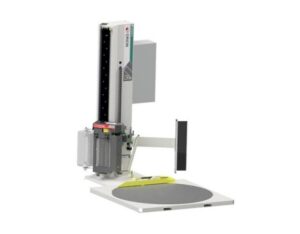
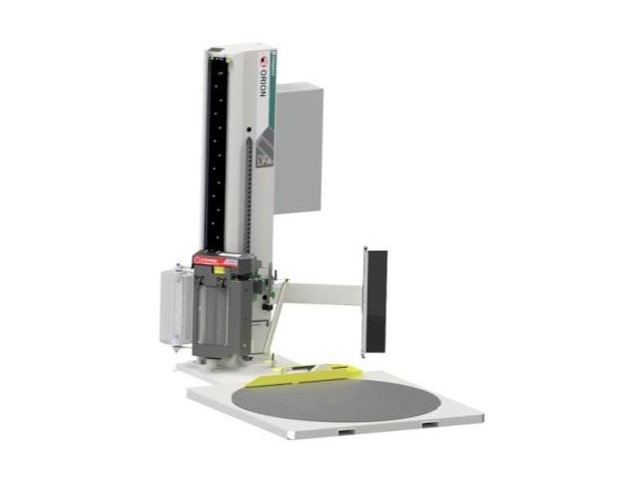
A turntable wrapper rotates the pallet while the film carriage moves vertically around the load. This configuration can be practical for conventional palletized products.
Rotary tower systems use a rotating arm or tower to move the film around a stationary load. This approach can be useful where the pallet itself should remain stationary.
Orbital systems are designed for products that may not fit conventional turntable or rotary tower applications. Orion specifically describes its orbital equipment as suitable for long loads that cannot be wrapped effectively using conventional configurations.
How Automation Can Improve Packaging Consistency
Manual wrapping can produce variations in film tension, overlap, and the number of wraps applied. Automated equipment can establish repeatable wrapping parameters, helping production teams maintain more consistent load containment.
Orion Packaging Systems incorporates technologies such as powered pre-stretch film carriages, HMI programming, conveyor systems, and automated cutting options across its product range. These technologies allow equipment to be configured around specific production requirements while reducing some repetitive manual tasks.
Automation can also support integration with broader packaging lines. Conveyorized systems, for example, can move loads through the wrapping stage without requiring every pallet to be manually positioned.
Choosing Equipment for Different Applications
Selecting stretch wrapping equipment requires more than considering the size of a pallet. Manufacturers should evaluate load dimensions, weight, shape, production speed, film requirements, available floor space, and the desired degree of automation.
Irregular or elongated products may require an orbital or specialty solution, while conventional pallet loads may be suited to turntable or rotary tower equipment. Orion states that its stretch wrapping systems are used across manufacturing, warehousing, distribution, food and beverage, building materials, and consumer product applications.
Why Maintenance Matters for Packaging Equipment
Stretch wrapping equipment operates through coordinated mechanical, electrical, and control components. Film carriages, rollers, motors, sensors, drives, cutting mechanisms, conveyors, and control systems can all affect machine performance.
Regular inspection and preventive maintenance can help identify wear before it contributes to unexpected downtime. Manufacturers should follow the maintenance procedures specified for their particular machine and maintain appropriate replacement components.
Orion Packaging Systems also provides after-sales support that includes spare parts, preventive maintenance, technical service, machine modernization, training, and remote or data-based services.
Replacement Components and Equipment Reliability
When a packaging machine develops a mechanical or electrical problem, using a compatible replacement component is important for maintaining proper operation. Components should be selected according to the machine model, specifications, and application rather than appearance alone.
Equipment documentation, model numbers, serial numbers, and manufacturer specifications can help maintenance teams identify the correct replacement. Orion’s service documentation specifically notes the importance of providing model and serial information when requesting assistance.
Keeping commonly needed components available can also reduce the time required to restore production after a failure.
Conclusion
Reliable packaging equipment depends on the right configuration, consistent operation, appropriate maintenance, and compatible replacement components. Understanding the difference between turntable, rotary tower, orbital, semi-automatic, and fully automatic systems can help facilities evaluate their packaging requirements more effectively. When selecting a machine part, compatibility with the specific equipment, operating environment, and manufacturer specifications should remain a central consideration.