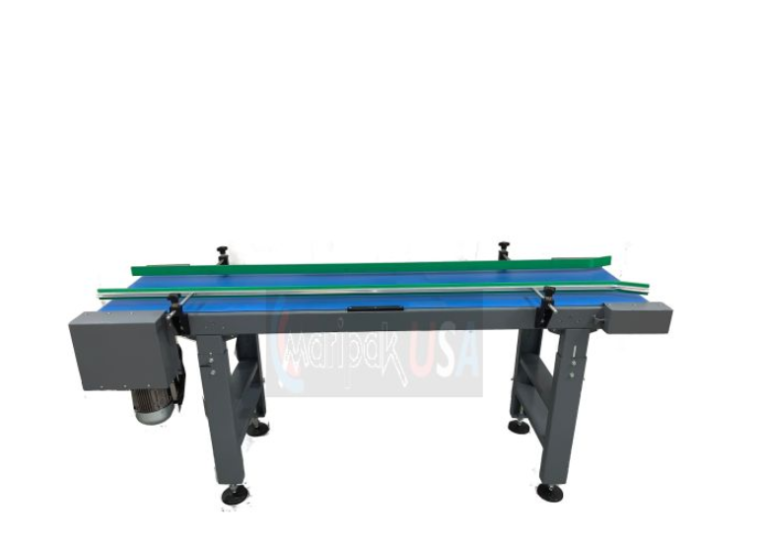


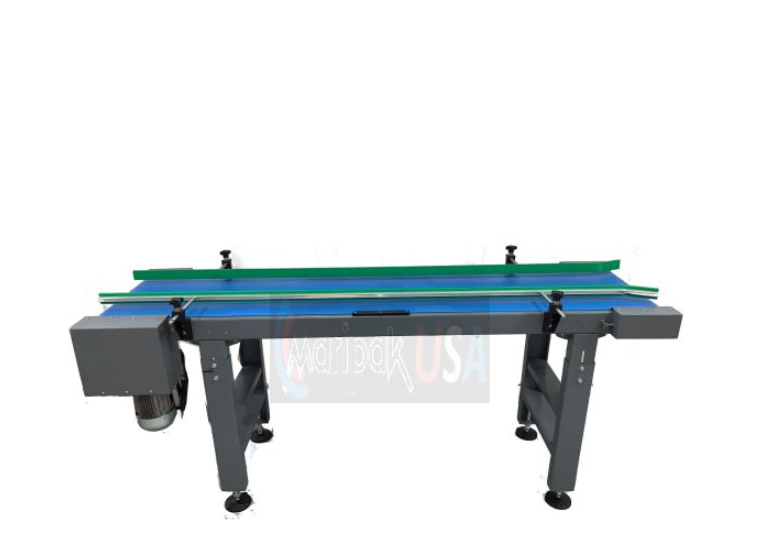
A motorized belt conveyor is a material-handling system that moves products, cartons, components, or packages along a fixed path using an electrically driven belt. Unlike gravity conveyors, it does not rely on a downward slope or manual pushing; instead, a motor powers the belt at a controlled speed. This makes it useful in packaging, assembly, warehousing, and distribution environments where products must move consistently from one workstation to another.
How a Motorized Belt Works
A motorized belt system typically includes a continuous belt, a drive pulley, a return pulley, support rollers or a slider bed, and an electric motor. When the motor activates, it rotates the drive pulley, which pulls the belt forward and carries items placed on its surface. The return pulley guides the belt back, while idler pulleys help maintain alignment and tension.
Many systems allow operators to adjust belt speed according to the product type and production requirement. A slower speed may be suitable for delicate items or manual loading, while a faster setting can support high-volume packaging lines. Some conveyors can also reverse direction, which helps with loading, unloading, and repositioning materials.
Why Facilities Use Motorized Belts
The main advantage of a motorized belt is controlled, repeatable movement. Products travel at a steady pace, which helps synchronize upstream and downstream processes such as filling, labeling, inspection, packing, and palletizing. This consistency can reduce bottlenecks and make production schedules easier to manage.
Conveyors also reduce the physical strain associated with manually carrying, pushing, or lifting items. By automating repetitive transport tasks, workers can focus on quality checks, assembly, packing, or equipment supervision. This can support safer working conditions and more efficient use of labor across a facility.
Common Industrial Applications
A motorized belt conveyor is suitable for many products that can rest securely on a flat surface. Packaging facilities use it to transfer boxes, cartons, bottles, and finished goods between stations. Warehouses use similar systems to move parcels through sorting, scanning, and shipping areas, while manufacturers use them to carry components through assembly or inspection processes.
These systems are especially valuable where products must move continuously without interruption. A belt conveyor can support long production runs, steady material flow, and predictable handoffs between machines or workstations. Its flat surface also provides stable support for items that may not move well on rollers.
| Application | Typical use | Key benefit |
| Packaging lines | Moving cartons and products to filling or sealing stations | Consistent workflow |
| Warehousing | Transferring parcels between sorting zones | Faster order handling |
| Assembly operations | Delivering components to workstations | Reduced manual handling |
| Food and beverage | Moving packaged goods for inspection or packing | Controlled product flow |
| Distribution centers | Routing packages toward shipping areas | Improved throughput |
Factors to Consider Before Installation
Before selecting a motorized belt conveyor, businesses should assess product dimensions, weight, shape, and handling requirements. Flat, stable items generally perform well on belt conveyors, while irregular or very heavy loads may require additional support rollers or a customized frame. Belt width, conveyor length, and load capacity should match the intended application.
Speed control is another important consideration. Variable-speed motors allow facilities to adjust movement based on product sensitivity, operator workload, or the requirements of connected equipment. In automated environments, conveyors may also integrate with sensors and control systems to monitor product flow and prevent jams.
Conclusion
A motorized belt conveyor offers a practical way to improve material flow, reduce manual handling, and support consistent production output. Its simple operating principle, adaptable design, and ability to integrate with other equipment make it a valuable part of many packaging and warehouse operations. For facilities building or upgrading a packaging line, evaluating a shrink wrap machine for sale alongside conveyor capacity, product size, and throughput needs can help create a more efficient and coordinated workflow.