

Modern kitchen design increasingly focuses on the relationship between cooking performance, efficiency, convenience, and layout. For homeowners who cook frequently, choosing high end cooking appliances can be an opportunity to improve temperature control, cooking capacity, workflow, and the overall functionality of the kitchen. However, a higher price does not automatically mean that an appliance is better suited to every household.
The most useful way to evaluate advanced cooking equipment is to focus on measurable features and practical requirements. Cooking technology, installation type, power source, oven capacity, ventilation, controls, cleaning systems, and energy consumption can all influence everyday performance. This guide explains the major features worth considering when planning a sophisticated cooking setup.
What Defines High End Cooking Appliances?
There is no single technical standard that determines whether an appliance qualifies as high-end. The term generally refers to products positioned toward the upper end of the market because of their construction, cooking technology, capacity, controls, design, or specialized features.
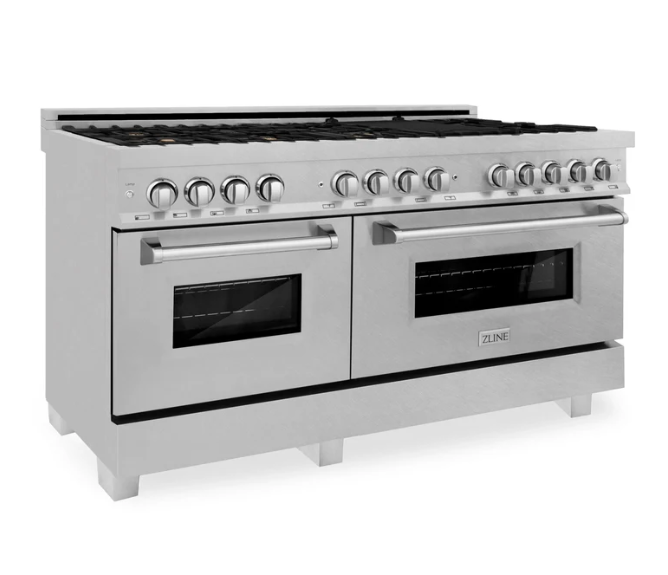
High end cooking appliances can include ranges, cooktops, wall ovens, steam ovens, convection ovens, warming drawers, and ventilation systems. Some models emphasize precise temperature control, while others focus on larger cooking capacity or specialized cooking modes.
The important distinction is between features that genuinely improve cooking and features that simply add complexity. A household that frequently bakes may prioritize oven temperature consistency, while someone who primarily prepares food on the stovetop may value burner configuration and heat control more highly.
1. Precise Temperature Control
Temperature control is one of the most important factors in cooking performance. Consistent heat can be especially useful for baking, roasting, simmering, and delicate preparations.
Induction cooking is one technology that can provide rapid heat response and precise control. ENERGY STAR explains that induction uses electromagnetic energy to heat compatible cookware directly and notes that approximately 85% of the heating energy is transferred to the cookware, compared with about one-third for gas cooking products.
This does not mean induction is automatically the best option for every cook. Gas, radiant electric, and induction systems each provide different cooking characteristics. The best choice depends on cookware, cooking style, available utilities, and personal preference.
2. Advanced Oven Technology
Modern ovens can offer significantly more than conventional heating. Convection systems use fans to circulate heated air, helping create a more consistent cooking environment throughout the oven cavity.
Other advanced features can include:
- Multiple heating elements
- Convection roasting
- Broiling
- Temperature probes
- Proofing settings
- Air-frying modes
- Steam-assisted cooking
- Specialized baking programmes
When evaluating luxury cooking appliances, homeowners should identify the functions they actually expect to use. A long list of cooking modes has limited value if most of them are rarely needed.
3. Larger Cooking Capacity
Capacity becomes particularly important for households that regularly prepare meals for several people or entertain guests.
A larger oven can accommodate multiple dishes simultaneously, while a wider cooktop can provide additional space for pots and pans. However, larger appliances also require more kitchen space and may have higher installation and operating requirements.
Before choosing an oversized appliance, measure the available opening and consider whether the kitchen’s electrical, gas, and ventilation infrastructure can support it.
Capacity should therefore be evaluated in relation to actual cooking habits rather than treated as a quality indicator by itself.
4. Flexible Cooktop Configurations
The arrangement of cooking zones can affect how efficiently a cook can work.
A well-designed cooktop should provide enough space for different cookware sizes without forcing pots and pans into awkward positions. Some models offer dedicated high-power zones, bridge elements, or flexible induction areas that can accommodate larger cookware.
For households that prepare several dishes simultaneously, the number and placement of cooking zones may be more useful than the appliance’s headline power rating.
When comparing premium kitchen appliances, examine the layout of the burners or cooking zones carefully. Two cooktops with the same number of zones may offer very different usable cooking space.
5. Professional-Level Features for Home Kitchens
The phrase cooking appliances can describe equipment designed with features inspired by commercial kitchens. These may include high-output burners, heavy-duty construction, large oven cavities, powerful convection systems, or specialized cooking controls.
Commercial equipment and residential equipment are not interchangeable, however. Residential kitchens have different ventilation, electrical, safety, and installation requirements.
Homeowners should also consider whether commercial-style features are appropriate for their cooking routine. High-output burners may be valuable for frequent high-heat cooking but unnecessary for someone who mainly prepares simple meals.
6. Ventilation Is Part of the Cooking System
Ventilation should be considered alongside the cooking appliance rather than treated as a separate design decision.
Cooking can generate smoke, grease, steam, and odors. A properly selected range hood or ventilation system can help remove these byproducts from the kitchen.
The required ventilation configuration depends on the cooking surface, kitchen layout, installation method, and local requirements. Homeowners planning a major kitchen renovation should determine ventilation needs before finalizing cabinetry and appliance placement.
A powerful cooking surface without appropriately planned ventilation can create an uncomfortable kitchen environment, particularly during high-temperature cooking.
7. Energy Efficiency and Cooking Technology
Efficiency is increasingly important when selecting cooking equipment. ENERGY STAR states that certified residential electric cooking products are, on average, 18% more efficient than standard models. Its current criteria for eligible residential electric cooking products include an integrated annual energy consumption limit of 195 kWh per year for applicable products.
Induction is also notable for its energy-transfer characteristics. Because electromagnetic energy heats compatible cookware directly, less energy is lost to the surrounding environment compared with some conventional cooking technologies.
Efficiency should nevertheless be evaluated alongside cooking performance, installation requirements, and the household’s preferred cooking methods.
How Should You Compare High-End Kitchen Equipment?
When comparing high-end kitchen equipment, start by identifying the cooking tasks that matter most.
For example:
- Frequent baking requires consistent oven temperature and useful convection features.
- High-temperature cooking may benefit from powerful burners.
- Large households may need greater oven and cooktop capacity.
- Frequent entertaining can make multiple cooking zones especially valuable.
- Small kitchens may benefit from multifunctional appliances.
- Energy-conscious households may prioritize efficient electric or induction technology.
This approach prevents the selection process from becoming focused solely on appearance or price.
What About Luxury Home Appliances?
The term luxury home appliances covers a broad category that can include refrigerators, dishwashers, wine storage systems, cooking equipment, and other major kitchen products.
When creating a coordinated kitchen, it can be tempting to select every appliance based on matching finishes. However, functional compatibility should come first.
Check whether appliances have compatible dimensions, electrical requirements, ventilation needs, and installation configurations. A visually consistent kitchen will be far more useful when its appliances also work effectively together.
Installation Requirements Matter
Advanced cooking appliances can have more demanding installation requirements than basic models.
Depending on the appliance, installation may involve:
- Dedicated electrical circuits
- Gas connections
- Ventilation ducts
- Cabinet modifications
- Countertop cutouts
- Clearance requirements
- Professional installation
These requirements should be reviewed before purchasing. A kitchen may have enough physical space for an appliance but still lack the electrical or ventilation infrastructure needed to operate it correctly.
For major renovations, appliance specifications should ideally be considered while the kitchen layout is still being designed.
Are High-End Appliances Worth the Investment?
The answer depends on how the kitchen is used.
For someone who cooks frequently, improvements in temperature control, cooking capacity, workflow, and specialized functions may provide meaningful everyday benefits. A household that rarely cooks, however, may not gain enough practical value from every advanced feature to justify a significant additional cost.
The best investment is therefore not necessarily the most expensive appliance. It is the appliance that provides the functions needed most often while fitting the kitchen’s space and infrastructure.
How to Build a Better Cooking Setup
A successful cooking setup should be planned as a system rather than as a collection of unrelated products.
Begin by considering:
- Cooking habits
- Kitchen dimensions
- Available electrical or gas service
- Oven and cooktop capacity
- Ventilation
- Desired cooking technologies
- Cleaning requirements
- Energy consumption
- Maintenance and service
- Long-term usability
This checklist can help homeowners distinguish useful upgrades from unnecessary features.
Conclusion
High end cooking appliances can provide advanced temperature control, larger capacities, flexible cooking configurations, specialized programmes, and refined construction. However, the value of these features depends heavily on how the kitchen is actually used. When comparing luxury cooking appliances, homeowners should look closely at cooking technology, oven performance, cooktop configuration, ventilation, installation requirements, and energy consumption. Premium kitchen appliances should also be evaluated according to practical needs rather than appearance or price alone. For buyers researching high-end kitchen equipment, the most effective strategy is to identify the cooking tasks that matter most and select equipment around those requirements. By taking this approach, homeowners can choose professional cooking appliances that provide meaningful improvements in performance and convenience without paying for features they are unlikely to use. Similarly, luxury home appliances should work together as part of a coordinated kitchen system.