



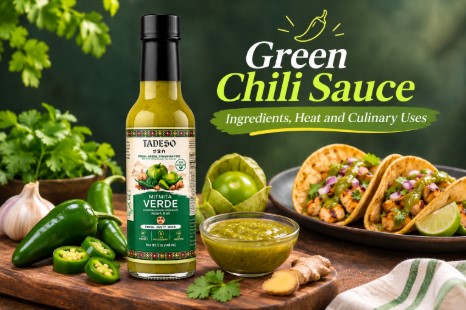
Green ingredients often bring a fresh, sharp character to everyday meals. Their flavours can range from mild and herbaceous to distinctly pungent, depending on the peppers, herbs, and seasonings involved. One preparation that demonstrates this versatility is green chili sauce, which combines chilli peppers with ingredients such as tomatillos, garlic, cilantro, and vinegar. Understanding its components, preparation methods, and culinary applications helps explain why green pepper-based condiments appear in so many different food traditions.
What Is Green Chili Sauce?
A green chilli condiment is generally made by combining green peppers with acidic, aromatic, or herb-based ingredients. Its flavour depends on the type of pepper, the preparation technique, and the supporting ingredients.
Serrano and jalapeño peppers are common choices. Serranos generally deliver a sharper, more intense heat, while jalapeños tend to have a milder, grassy character. Tomatillos may also be included to introduce acidity and a slightly fruity taste.
The defining characteristic of green chili sauce is therefore not a single recipe but the combination of green peppers and complementary ingredients.
Ingredients That Shape Its Flavour
Green Peppers
Serrano and jalapeño peppers provide the central heat component. Their capsaicin content creates the burning sensation, while their natural aromas contribute a characteristic green pepper flavour.
The amount used determines much of the final intensity. Removing the seeds may change texture and reduce some heat, but it does not guarantee a mild result because capsaicin is concentrated mainly in the internal white tissue.
Tomatillos
Tomatillos are small fruits enclosed in papery husks. They are commonly used in Mexican green sauces because they contribute acidity, moisture, and a distinctive tangy flavour.
Herbs and Aromatics
Cilantro introduces a fresh herbal note, while garlic adds savoury depth. Ginger can contribute gentle warmth and aromatic complexity.
How Preparation Methods Affect the Result
The preparation process influences both texture and flavour.
- Raw blending: Preserves the fresh, grassy character of green peppers and herbs.
- Roasting: Develops deeper flavours and introduces lightly charred notes.
- Simmering: Produces a more integrated texture as ingredients soften and combine.
- Fermentation: Encourages acidity and creates additional flavour complexity through microbial activity.
A hot green sauce can therefore taste dramatically different depending on how its ingredients are processed, even when the same peppers are used.
Culinary Uses Across Different Dishes
Green pepper condiments are versatile because their acidity and herbal characteristics complement several food groups.
Tacos and Wraps
A small serving can brighten tacos filled with grilled vegetables, chicken, beans, or seafood. The acidity provides contrast to rich fillings, while the peppers introduce additional heat.
Eggs and Breakfast Dishes
Green chilli preparations can be served alongside scrambled eggs, omelettes, and breakfast potatoes. Their sharp flavour adds contrast without requiring complicated seasoning.
Roasted Vegetables
Cauliflower, potatoes, carrots, and courgettes can benefit from a light drizzle of green pepper condiment after roasting. Adding it after cooking preserves more of its fresh character.
Chicken and Seafood
The combination of acidity, herbs, and chilli works well with grilled chicken and seafood. It can also be incorporated into marinades, provided the preparation is handled correctly.
These applications explain why different styles of spicy hot sauce are used as both finishing condiments and cooking ingredients.
Evaluating Ingredients and Quality
When comparing commercially prepared condiments, the ingredient list provides useful information about flavour and formulation.
A product containing tomatillos, serrano peppers, cilantro, garlic, and ginger will have a different flavour profile from one relying mainly on green chillies and vinegar.
These ingredient details illustrate what consumers should examine when assessing a premium hot sauce: the main pepper varieties, supporting ingredients, acidity, and intended heat level. The term premium alone does not establish nutritional or ingredient superiority.
Conclusion
Green pepper condiments bring together freshness, acidity, herbal aromas, and varying degrees of heat. Their versatility makes them suitable for breakfast dishes, tacos, roasted vegetables, seafood, and marinades. Understanding the ingredients and preparation methods provides a clearer picture of how different formulations achieve their distinctive flavour. Tadeso Hot Sauce provides an example of combining green peppers and Ethiopian-inspired seasoning with familiar culinary ingredients.