


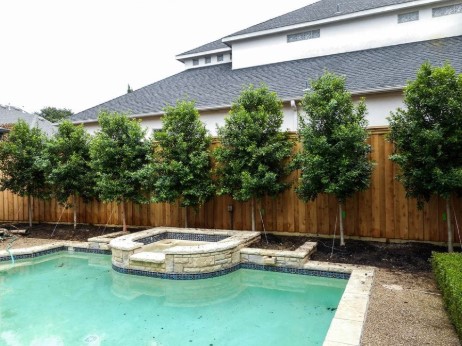
A boundary planting has to do more than fill an empty strip of ground. It may need to screen neighboring views, soften a fence, withstand seasonal weather, and still look presentable with manageable care. Carolina cherry is often selected for these purposes because it combines glossy evergreen foliage with a naturally dense branching habit. It can be maintained as a hedge or allowed to develop into a small tree. Its eventual size, however, is substantial, so choosing the right position is just as important as preparing the soil.
Identify the plant and its landscape role
Carolina cherry, botanically Prunus caroliniana, is a broadleaf evergreen native to the southeastern United States. It produces leathery, dark-green leaves and small clusters of creamy-white flowers in late winter or spring. The flowers are followed by dark, cherry-like fruits that may attract birds. Its dense, upright-to-rounded form makes it useful for property screening, informal boundaries, and specimen planting.
The species can grow much larger than a typical clipped shrub. University of Florida IFAS describes trees reaching around 40 feet tall with a spread of about 25 feet, so plan for mature dimensions from the beginning.
Choose a site that supports healthy roots
Full sun encourages compact growth, although the species tolerates partial shade. Drainage matters more than soil texture: it can grow in clay, loam, or sand if water does not remain around the roots.
Water young plants consistently while they establish. Mature trees tolerate some dry weather, but prolonged heat still calls for deep watering at the base. Avoid keeping the soil saturated, which can stress roots and cause yellowing.
Plan the screen around mature dimensions
A row of young trees may look sparse at first, encouraging gardeners to plant them too close together. Resist that temptation. Allow enough room for the expected canopy width and for access when pruning. The collection listing suggests spacing of approximately four to six feet for hedge use, but the appropriate distance depends on plant size, cultivar, desired density, and the finished hedge width. Check the nursery’s guidance for the specific stock being purchased.
Locate underground utilities and consider paving, walls, driveways, and property boundaries before digging.
Shape it without sacrificing its natural form
It responds well to pruning and can be maintained as a formal hedge or left in its natural outline. Begin shaping young plants early, removing damaged, crossing, or poorly placed stems with clean hand tools.
Avoid repeatedly shearing only the outer surface. Dense outer growth can shade the interior, leaving the inner branches sparse. Selective cuts help maintain airflow and a healthier structure. If a tree is being trained with a central leader, establish that framework early rather than trying to correct a mature, multi-stemmed specimen later.
Understand flowers, fruit, and safety
Spring flowers provide nectar for visiting pollinators, while the small fruits can be eaten by birds. However, the plant is not edible for people or pets. North Carolina State University Extension identifies Carolina cherry laurel as having high-severity poisonous characteristics. Leaves, stems, and seeds contain compounds that can release cyanide when damaged or digested. Keep prunings and fallen plant material away from children and animals, and wear gloves when handling large amounts of cut foliage. Fruit can create temporary litter, and bird-dispersed seeds may produce seedlings.
Keep an eye on stress
Check for yellowing, leaf spots, wilting, or dieback. Poor drainage, drought, and trunk injury can weaken trees and make borer attacks more likely. Correct site stress and remove affected branches when appropriate.
Conclusion
Carolina Cherry offers year-round foliage and flexible use as a hedge or tree, but it needs enough room to mature. Compare the available sizes in the collection at Plant Clearance and match the plant to the site’s light, drainage, and screening needs. A carefully chosen location will reduce corrective pruning and help the planting develop into a durable landscape feature.