



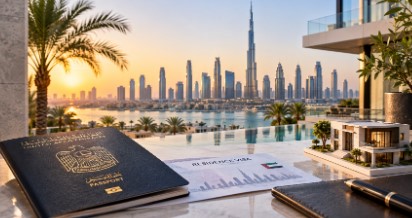
Long-term residency has become an increasingly attractive option for foreign nationals looking to build a more permanent connection to the UAE, whether for business, family, or lifestyle reasons. Unlike standard employment visas tied to a single sponsor, this residency route allows holders to remain in the country independently and sponsor eligible family members. Understanding how the Golden Visa UAE program actually works, including its eligibility categories and renewal terms, helps applicants figure out which pathway realistically fits their situation before starting the paperwork.
Who The Program Is Designed For
The program grants long-term renewable residence that doesn’t depend on an employer, while still allowing holders to sponsor qualifying family members and remain outside the UAE longer than the standard six-month limit without losing residency status. Eligible categories include investors, entrepreneurs, specialized talents, outstanding students, and select professional groups, meaning the pathway isn’t limited to a single type of applicant.
The Real Estate Investment Route
Property investment remains one of the most commonly used pathways into the Golden Visa UAE program. Investors meeting a threshold of AED 2,000,000 in qualifying property currently become eligible for long-term residency, and this route does not require a local sponsor. This threshold structure means the investment route is often the most straightforward path for those already considering property ownership in the country for other reasons.
Recent Changes To Property Requirements
Eligibility rules around this pathway have shifted in recent years, generally making the process more accessible. A previous requirement to pay at least half the property value or a minimum upfront amount was removed, meaning eligibility now depends solely on total property value reaching the required threshold regardless of mortgage status, and properties financed through approved local bank loans also qualify. This change matters significantly for anyone planning to buy property in Dubai with financing rather than an outright cash purchase.
Skilled Professional And Salary-Based Categories
Beyond investment routes, professionals meeting certain salary and qualification thresholds can also access long-term residency. Current thresholds place the skilled professional route at a basic salary of at least AED 30,000 per month alongside a bachelor’s degree and appropriate occupational classification, while executive-level applicants face a higher salary threshold alongside additional experience requirements. These categories give employed professionals a pathway that doesn’t require the same capital commitment as the investment routes.
General Eligibility Requirements Across Categories
Regardless of which category an applicant pursues, some baseline requirements apply universally. Applicants must be non-UAE nationals at least 18 years old, hold a clean criminal record, demonstrate legal income appropriate to their category, and carry valid UAE-approved health insurance. Meeting these baseline conditions is necessary but not sufficient on its own, since each category still carries its own specific documentation and evidence requirements.
Why Property Remains A Popular Pathway
For many applicants, the property route offers a dual benefit that other categories don’t provide in quite the same way, combining a tangible asset with a path to long-term residency. Choosing this route under the Golden Visa UAE program means evaluating not just the investment threshold but also the property’s location, rental potential, and long-term value, since the investment continues to matter well beyond the initial application.
Conclusion
Understanding which eligibility category realistically fits your circumstances is the most important first step before starting a long-term residency application in the UAE. Whether pursuing the investment route, a skilled professional category, or another qualifying pathway, applicants who plan to buy property in Dubai as part of that process should weigh both the residency benefits and the property’s standalone value. Taking time to review current thresholds and documentation requirements upfront helps avoid delays once the application process actually begins.