

Healthcare facilities generate different types of waste through patient care, medical procedures, laboratory activities, and routine operations. Some materials can be handled as ordinary waste, while others may contain infectious agents, harmful chemicals, pharmaceutical residues, or sharp objects that require specialised handling. Effective healthcare waste management helps reduce exposure risks, protect the environment, and maintain safe conditions for patients, healthcare workers, and the wider community.
Hospitals, clinics, dental practices, laboratories, and long-term care facilities all need appropriate procedures for managing the waste they produce. These procedures should cover waste identification, segregation, collection, storage, transportation, treatment, and final disposal.
A well-organised system also supports regulatory compliance and helps facilities use resources responsibly. When staff understand their responsibilities and follow established protocols, healthcare organisations can reduce preventable injuries, improve workplace safety, and maintain more consistent waste-handling practices.
Different Types of Healthcare Waste
Identifying waste correctly is an essential first step because different materials require different handling methods.
- General healthcare waste: This includes non-hazardous materials such as office paper, food scraps, and packaging that have not been contaminated by infectious substances or other hazardous materials. Where permitted, these items may be managed through ordinary waste or recycling systems.
- Infectious waste: Materials suspected or known to contain pathogens may include contaminated dressings, certain laboratory materials, and waste from procedures involving infectious patients. Applicable rules determine which materials require treatment before disposal.
- Sharps waste: Needles, scalpels, lancets, and other objects capable of puncturing skin can cause injuries and potentially transmit infections. They must be placed in approved, puncture-resistant sharps containers.
- Pharmaceutical waste: Expired, unused, or contaminated medicines may require specialised disposal. Certain pharmaceutical products, including some hazardous drugs, have additional handling requirements.
- Chemical waste: Disinfectants, solvents, laboratory reagents, and other chemicals may present toxic, corrosive, reactive, or flammable hazards. Their disposal depends on their properties and applicable environmental regulations.
Effective Waste Segregation at the Point of Generation
Waste segregation means separating different waste streams where they are produced rather than sorting them later. This practice is important because mixing hazardous and non-hazardous materials can increase disposal costs, create additional exposure risks, and complicate treatment.
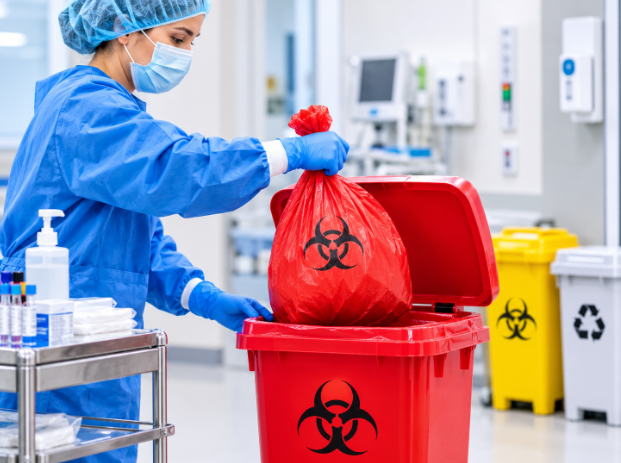
Healthcare facilities should provide clearly labelled containers in suitable locations throughout clinical and support areas. Containers must be compatible with the waste being collected, easy for staff to identify, and appropriate for the expected volume.
Colour-coding systems are commonly used, but the colours and container requirements vary by jurisdiction. Staff should therefore follow local regulations and facility-specific procedures instead of assuming that one colour system applies everywhere.
Safe Collection, Storage, and Transportation
After segregation, healthcare waste must be collected and moved using procedures that minimise exposure and prevent spills. Staff should use appropriate personal protective equipment and avoid handling waste containers in ways that could cause punctures, leaks, or accidental contact.
Sharps containers should be replaced before they become overfilled, following the manufacturer’s fill line and applicable requirements. Waste bags and containers should be securely closed before transport, and damaged or leaking packages must be managed under established safety procedures.
Temporary storage areas should be secure, appropriately ventilated where required, and inaccessible to unauthorised individuals. Facilities must also follow applicable time and temperature limits, particularly for waste that can deteriorate or create additional biological hazards.
Treatment and Environmentally Responsible Disposal
Healthcare waste treatment methods vary according to the material and its hazards. Some infectious waste may be treated through validated steam sterilisation processes, while other waste streams may require approved alternative technologies or specialised disposal methods.
Chemical and pharmaceutical waste often needs a different approach because standard infectious-waste treatment may not neutralise chemical hazards. Sharps also require suitable handling and treatment based on local requirements.
Facilities should work with authorised waste-management providers and verify that treatment methods are appropriate for each waste category. Staff should never assume that all healthcare waste can be safely placed in the same container or processed using the same technology.
Conclusion
Safe healthcare waste practices depend on accurate segregation, secure handling, appropriate treatment, and compliance with applicable regulations. When specialised hazardous waste pickup is required, facilities should confirm that the service provider is authorised to handle the relevant waste streams and follows applicable transportation and disposal requirements. By training employees, maintaining suitable storage systems, and reviewing procedures regularly, healthcare facilities can reduce preventable risks and improve environmental responsibility.