

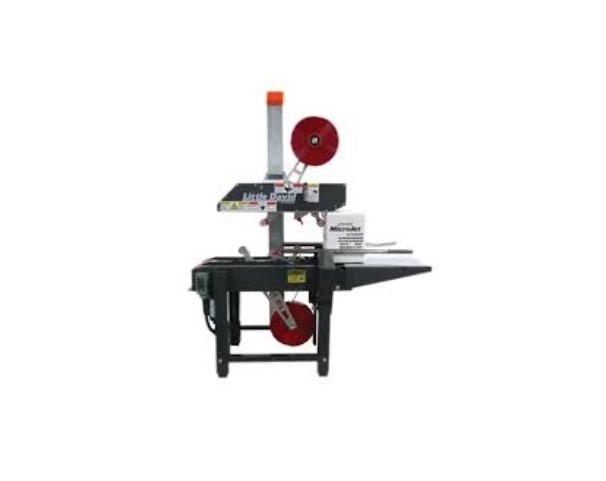
A Loveshaw Little David tape machine is a type of industrial case-sealing equipment designed to apply pressure-sensitive tape to corrugated cartons. These machines are used in packaging operations where boxes need to be closed consistently and efficiently before shipment or further processing.
Little David case sealers have been developed for different production requirements, including uniform and random case sizes, semi-automatic operation, and fully automated packaging lines. Depending on the model, a machine may use side belts, top and bottom drives, tape cartridges, sensors, and adjustable guides to move cartons through the sealing process.
Understanding how Loveshaw Little David tape machine type of equipment works can help operators and maintenance teams identify suitable operating practices and recognize potential component problems.
How Does a Case Sealing Machine Work?
The basic process is relatively straightforward.
A corrugated carton enters the machine after its flaps have been positioned correctly. Drive belts or other conveying mechanisms move the box through the sealing area while the tape head applies pressure-sensitive tape across the carton seam.
Depending on the machine configuration, the top and bottom seams may be sealed during the same pass.
Some semi-automatic systems require an operator to adjust the machine for carton dimensions, while automated models can accommodate different case sizes with greater independence. The exact operating procedure depends on the model and configuration.
What Types of Boxes Can These Machines Handle?
Case sealers are available for different carton sizes and production requirements.
For example, specifications for one Little David semi-automatic model show that it can accommodate a range of case lengths, widths, and heights, while different configurations are designed for other box dimensions.
The correct machine must therefore be matched to the cartons being processed.
Important considerations include:
- Carton length
- Carton width
- Carton height
- Box material
- Box weight
- Flap configuration
- Tape width
- Production volume
Using cartons outside a machine’s recommended range can lead to poor sealing, jams, or unnecessary wear.
What Is the Role of Drive Belts?
Drive belts are responsible for moving cartons through many case-sealing machines.
They must maintain sufficient contact with the carton to move it smoothly and consistently. If a belt becomes worn, contaminated, loose, or damaged, the carton may move unevenly or fail to pass through the sealing area correctly.
Some Little David equipment uses continuous belt-drive systems, with certain models offering different operating speeds depending on configuration.
Regular inspection can help identify cracking, excessive wear, contamination, or improper tension before these problems cause production interruptions.
How Does the Tape Cartridge Work?
The tape cartridge is a central part of a tape-based case sealer.
It holds and guides the tape while mechanisms within the cartridge help apply and cut it. Modern cartridge designs can include rollers and knife assemblies intended to simplify tape loading and maintenance.
Some Little David equipment uses CaseLocker tape cartridges featuring tool-less removal of certain wear components and safety features around the cutting blade.
A properly functioning tape cartridge is essential for creating a consistent seal.
Why Is Tape Selection Important?
The tape must be compatible with the machine and the packaging application.
Pressure-sensitive tape is commonly used in these case-sealing systems. Tape width, adhesive characteristics, carton material, environmental conditions, and package weight can all affect sealing performance.
A tape that does not adhere properly may result in open seams or poor package integrity.
Operators should follow the machine and tape manufacturer’s recommendations rather than assuming that every packaging tape is suitable for every tape head.
What Are Common Signs of a Tape Machine Problem?
Several symptoms may indicate that a case sealer requires inspection.
Common warning signs include:
- Tape not adhering properly
- Tape cutting incorrectly
- Cartons stopping inside the machine
- Uneven tape placement
- Excessive belt slipping
- Unusual machine noise
- Cartons becoming misaligned
- Repeated tape breaks
- Inconsistent sealing pressure
These symptoms can have multiple causes.
For example, inconsistent tape application could result from incorrect tape threading, worn rollers, improper carton positioning, or problems with the tape itself.
Troubleshooting should therefore begin with the simplest possible causes before replacing major components.
How Does Carton Alignment Affect Sealing?
Correct carton alignment is essential for consistent sealing.
Side rails, drive belts, guides, and other positioning mechanisms help keep the carton centered as it moves through the machine.
If the carton is misaligned, the tape may not land correctly over the seam.
Some models require manual adjustments to accommodate changes in box width or height, while automated systems may make adjustments according to their configuration.
Operators should verify machine settings whenever carton dimensions change.
What Maintenance Does a Tape Machine Need?
Regular maintenance can help preserve machine performance.
Maintenance tasks may include:
- Cleaning tape residue
- Inspecting drive belts
- Checking rollers
- Examining tape-cutting components
- Inspecting bearings
- Checking electrical connections
- Verifying guides and adjustments
- Inspecting fasteners
- Cleaning sensors
- Reviewing unusual vibration or noise
The maintenance schedule should be based on the specific equipment model and its operating conditions.
Machines running continuously or processing large carton volumes may experience more wear than equipment used intermittently.
Why Are Bearings Important?
Bearings support rotating shafts and rollers while allowing them to move with reduced friction.
In packaging equipment, worn bearings can produce unusual sounds, vibration, heat, or irregular movement.
A deteriorating bearing can also affect connected components.
For this reason, bearings should be inspected when a machine begins exhibiting unusual mechanical behaviour. Replacing a bearing without investigating alignment or loading issues may not resolve the underlying problem.
What Should You Know About Cutting Blades?
Tape-cutting blades need to produce a clean cut after the required tape length has been applied.
A dull or damaged blade may leave uneven tape edges or fail to cut the tape properly.
Modern tape cartridges may incorporate blade designs intended to simplify replacement and improve operator safety. Some systems also include guards that help reduce direct exposure to the blade during normal operation.
Blade inspection should be performed according to the equipment’s maintenance instructions.
How Can Operators Reduce Machine Wear?
Correct operation can significantly influence equipment longevity.
Operators should use cartons within the machine’s specified range, maintain appropriate adjustments, keep the sealing area clean, and avoid forcing cartons through the equipment.
When a machine begins producing unusual sounds or repeated sealing defects, continuing to operate it without investigation can increase the likelihood of secondary damage.
Operator training is therefore an important part of equipment maintenance.
What Are the Benefits of Automated Case Sealing?
Automated case sealing can reduce repetitive manual work and provide more consistent packaging output.
Fully automatic systems can perform sealing operations with limited operator intervention, while semi-automatic equipment can provide a balance between manual control and mechanical assistance.
Some automated case sealers are designed to handle different box sizes and automatically adjust certain machine settings.
The appropriate level of automation depends on production volume, carton variability, available floor space, labour requirements, and integration with other packaging equipment.
How Should Replacement Components Be Identified?
Correct identification is critical when replacing a component.
Maintenance personnel should record the machine model, serial number, original component number, dimensions, and other relevant specifications.
Photographs can help with visual identification, but they should not be the only source of information.
Two components can look similar while having different dimensions, materials, tolerances, or performance characteristics.
Technical manuals and equipment documentation can provide additional confirmation before an order is placed.
What Are Parts of a Tape-Sealing Machine?
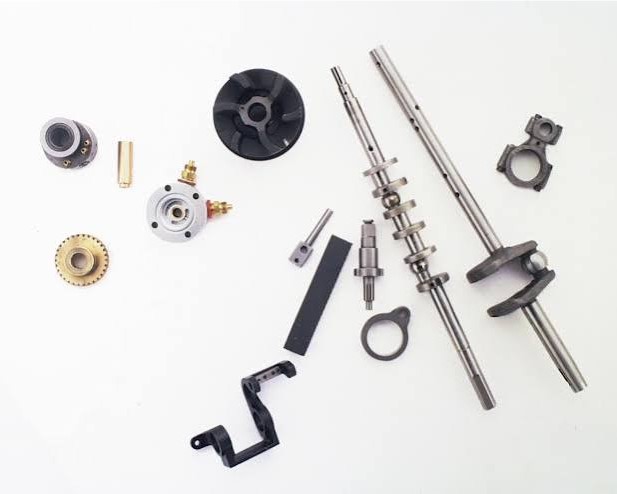
The parts of machines used in industrial case sealing can vary by model, but common components include drive belts, rollers, bearings, tape cartridges, blades, motors, gears, shafts, guides, sensors, electrical controls, and structural frames.
Each component contributes to a particular stage of the sealing process.
Understanding these components makes it easier to diagnose problems. For instance, a carton that fails to move may require inspection of the drive system, while inconsistent tape cutting may point toward the cartridge or blade assembly.
How Can Businesses Reduce Packaging Downtime?
A proactive maintenance program can reduce unexpected interruptions.
Businesses can maintain records of component replacements, inspect high-wear components regularly, and keep critical replacement items available when appropriate.
Monitoring recurring problems is particularly valuable.
If the same belt, bearing, or tape-related component repeatedly fails, maintenance personnel should investigate the reason rather than simply replacing it each time.
Potential causes can include misalignment, excessive loading, contamination, incorrect adjustment, or unsuitable operating conditions.
Conclusion
A Loveshaw Little David tape machine is designed to streamline carton-sealing operations by moving boxes through a controlled process and applying pressure-sensitive tape to their seams. Depending on the model, these machines can support uniform or variable carton sizes and may operate as semi-automatic or fully automated systems. Reliable performance depends on correct machine adjustment, suitable tape, proper carton alignment, and regular inspection of wear-prone components. Understanding the parts of machines involved in the sealing process can make troubleshooting more systematic and help maintenance teams identify potential problems before they lead to extended downtime. Operators should follow model-specific maintenance procedures, inspect belts and rollers, monitor tape cartridges and blades, and investigate unusual noise, vibration, or sealing defects promptly.