

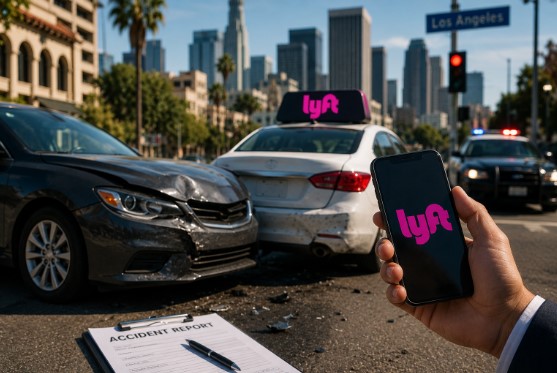
Rideshare accidents can be more complicated than ordinary car crashes because insurance coverage may depend on what the driver was doing in the Lyft app at the moment of the collision. A passenger, driver, pedestrian, cyclist, or occupant of another vehicle may all face different questions about liability, available coverage, medical expenses, and documentation.
A Lyft accident attorney in Los Angeles may help injured people understand which insurance policies could apply, preserve evidence, communicate with insurers, and evaluate the losses connected with a crash. Because California rideshare coverage changes according to the driver’s app status, identifying the exact stage of the trip is often one of the first important steps. Lyft itself separates coverage into different periods depending on whether the app is off, the driver is waiting for a request, or the driver has accepted a ride and is transporting or traveling to a passenger.
Why Are Lyft Accidents Different From Ordinary Crashes?
A conventional collision usually involves the drivers’ personal auto insurance policies. Rideshare accidents can introduce an additional layer because the Lyft platform may provide insurance during certain periods of app use.
When the Lyft app is off, the driver’s personal auto insurance generally applies. When the app is on and the driver is available to receive ride requests, Lyft maintains certain third-party liability coverage for covered accidents if personal insurance does not apply. Once a ride has been accepted and the driver is traveling to or carrying a passenger, different coverage can apply.
A Lyft accident attorney in Los Angeles may therefore need to determine the driver’s app status before assessing potential insurance sources.
The Driver’s App Status Can Change Available Coverage
Timing matters significantly in a rideshare claim.
Lyft describes three operating periods in California. Period 1 begins when the driver logs into driver mode and remains available for requests. Period 2 begins after the driver accepts a request and travels toward the passenger. Period 3 covers the time when the passenger is in the vehicle until the trip ends.
These distinctions can affect which policy responds to a claim.
For someone injured in a crash, a Lyft accident attorney in Los Angeles may investigate app records, trip information, driver statements, and other documentation to establish exactly what the driver was doing at the time.
Insurance Limits Can Differ by Period
The amount and type of available insurance are not necessarily the same throughout a driver’s shift.
Lyft currently states that when a driver is online and waiting for a request, it maintains third-party liability coverage for covered accidents if the driver’s personal insurance does not apply. Its general published minimums include $50,000 per person for bodily injury and $100,000 per accident for bodily injury, with additional property-damage coverage described in its insurance materials.
When a driver is en route to pick up a passenger or completing a ride, Lyft states that it maintains at least $1 million in third-party auto liability coverage in most markets, subject to policy terms and exceptions.
This is one reason a Lyft accident attorney in Los Angeles may examine policy documents rather than assuming a single coverage limit applies to every rideshare accident.
Personal Insurance May Not Cover Rideshare Activity
Another complication is that personal auto policies may exclude or limit coverage when a vehicle is being used for rideshare work.
Lyft advises drivers that many personal auto insurance policies do not cover them while they are driving on the platform and suggests considering rideshare insurance or an appropriate endorsement.
The California Department of Insurance has also warned rideshare drivers about potential coverage gaps between personal and transportation-network-company policies.
For an injured claimant, identifying every available insurance policy may therefore require careful investigation.
Who Could Be Liable After a Lyft Crash?
Liability depends on how the accident happened.
Potentially responsible parties might include:
- The Lyft driver
- Another motorist
- Multiple drivers
- A vehicle owner
- A commercial vehicle operator
- Another party whose negligence contributed to the collision
A Lyft accident attorney in Los Angeles may review police reports, photographs, video footage, witness statements, vehicle damage, and other evidence to determine how the crash occurred.
A rideshare company’s insurance involvement does not automatically mean the rideshare driver caused the accident. Liability still needs to be established from the facts.
Evidence Can Disappear Quickly
Some accident evidence is time-sensitive.
Dashcam recordings may be overwritten. Nearby businesses may erase surveillance footage. Vehicles may be repaired, and witnesses can become harder to locate.
Important evidence can include:
- Photographs of the scene
- Vehicle damage
- App screenshots
- Ride receipts
- Driver and passenger information
- Police reports
- Witness contact details
- Medical records
- Video footage
A Lyft accident attorney in Los Angeles may help identify evidence that should be preserved before it becomes unavailable.
For passengers, keeping the digital ride receipt can also help establish which trip was underway when the crash occurred.
Medical Documentation Is Important
Medical records can help connect injuries to the accident and document the treatment that followed.
After a crash, some injuries may be obvious immediately, while others may become more noticeable later. Seeking appropriate medical evaluation also creates a record of symptoms, diagnosis, treatment, and recommended follow-up.
A legal claim may involve medical expenses, future treatment needs, lost income, and other consequences depending on the circumstances.
A Lyft accident attorney in Los Angeles may review this documentation when evaluating the extent of claimed losses.
Legal representation does not replace medical advice, so treatment decisions should remain between the injured person and qualified healthcare professionals.
Passengers Can Face Different Issues Than Drivers
A passenger generally does not control how the Lyft vehicle is operated, but that does not make the claims process automatically simple.
The crash might have been caused by the Lyft driver, another driver, or more than one party.
Determining where compensation should come from can require comparing several insurance policies.
If an uninsured or underinsured motorist causes the collision, additional coverage questions may arise. Lyft notes that first-party coverages during certain rides can include uninsured or underinsured motorist protection depending on applicable policy terms and location.
This is another situation where a Lyft accident attorney in Los Angeles may help interpret which coverage could potentially apply.
Lyft Drivers May Have Their Own Injury Issues
Drivers injured while working can face a different set of questions from passengers.
Lyft currently states that approved drivers completing qualifying trips originating in California may be eligible for occupational accident insurance, subject to policy terms. Published benefits include medical-expense coverage and certain disability benefits for qualifying injuries.
That coverage is separate from the auto liability policy used to address third-party injury or property-damage claims.
Drivers may therefore need to distinguish among personal insurance, Lyft’s auto coverage, occupational accident benefits, and any other potentially applicable policies.
Why Insurance Adjusters Require Careful Communication
Insurance companies investigate claims before agreeing to payment.
Adjusters may request statements, medical information, photographs, repair estimates, or other documents. Their role is to evaluate the claim under the applicable policy.
Statements made early in the process can sometimes become important later.
A Lyft accident attorney in Los Angeles may communicate with insurers on a client’s behalf and help organize supporting documentation.
This can be particularly useful where more than one insurer disputes responsibility or argues that another policy should respond first.
Damages Extend Beyond Vehicle Repairs
A serious rideshare accident may create losses beyond damage to the vehicles involved.
Depending on the facts, a claim may involve:
- Medical expenses
- Future medical needs
- Lost wages
- Reduced earning capacity
- Property damage
- Pain and suffering
- Other accident-related losses permitted under California law
The value of a claim depends on evidence rather than a standard formula.
A Lyft accident attorney in Los Angeles may examine medical records, employment information, expert opinions, and other documentation when assessing potential damages.
No lawyer can responsibly guarantee a particular financial outcome.
California Accident Reporting Rules May Apply
Some California collisions must be reported to the Department of Motor Vehicles.
The California DMV states that accidents involving injury, death, or property damage above the applicable reporting threshold can trigger reporting requirements.
Separate reporting may also be required through the rideshare platform or insurance carrier.
Because requirements can depend on the circumstances, people involved in a rideshare collision should keep copies of accident reports and related communications.
These documents may later become important when reconstructing the sequence of events.
When Might Legal Advice Be Useful?
Not every minor accident necessarily requires legal representation.
However, speaking with a lawyer may be worth considering when:
- Injuries are serious
- Liability is disputed
- Multiple vehicles are involved
- Insurance coverage is unclear
- The driver was actively using the Lyft app
- Medical expenses are significant
- An insurer denies or undervalues a claim
- Long-term effects may be involved
A Lyft accident attorney in Los Angeles can review the facts and explain potential legal options based on California law.
The important point is to obtain case-specific guidance rather than relying entirely on general information online.
Conclusion
Lyft crashes can involve overlapping questions about negligence, app status, personal insurance, rideshare coverage, medical documentation, and damages. Working with a Lyft accident attorney in Los Angeles may help an injured person determine which policies potentially apply and what evidence should be preserved. Consulting a Lyft accident lawyer in Los Angeles can be particularly relevant when injuries are substantial, multiple insurers are involved, or there is disagreement about who caused the collision. Because every rideshare accident is different, legal and insurance questions should be assessed according to the specific facts. Careful documentation, timely medical attention, and a clear understanding of the driver’s Lyft status can provide a stronger foundation for evaluating what happens next.