

Kitchen ventilation needs to balance performance, available space, cooking habits, and installation requirements. A well-designed hood can help capture smoke, steam, grease, heat, and cooking odors before they spread throughout the kitchen. For homeowners working with existing cabinetry, an under-cabinet configuration can provide ventilation without requiring a large decorative chimney structure.
A stainless steel under cabinet vent hood can be particularly useful because it combines a compact installation format with a durable metal enclosure. Stainless steel is also widely used for ventilation equipment because it is relatively easy to clean and can withstand the heat and moisture associated with cooking. Current under-cabinet ventilation systems are available in multiple widths and airflow capacities, allowing homeowners to select a configuration suited to different cooking surfaces.
What Is an Under-Cabinet Vent Hood?
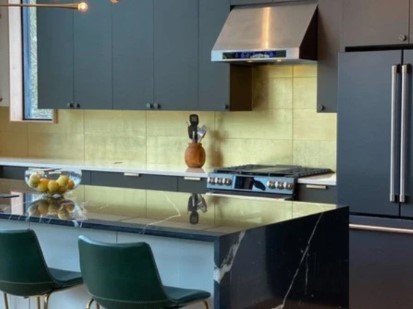
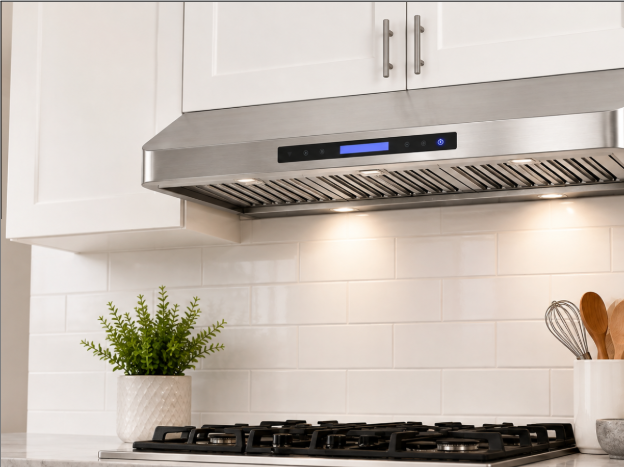
An under-cabinet vent hood is designed to fit beneath a kitchen cabinet positioned above a range or cooktop. Rather than extending upward through a decorative chimney, the hood occupies the space directly below the cabinet.
This design can be useful when homeowners want to preserve existing cabinetry while adding or replacing kitchen ventilation. Under-cabinet models are available in different widths, including configurations designed for compact cooking surfaces as well as larger professional-style ranges. Current product ranges include models from approximately 30 to 60 inches wide, with some larger options also available.
The hood may be ducted, meaning cooking air is exhausted outdoors, or convertible to ductless operation, depending on the model.
Why Choose Stainless Steel?
Stainless steel is a common material for kitchen ventilation because it offers a combination of durability, cleanability, and resistance to moisture.
Cooking can expose a hood to grease, steam, heat, and airborne food particles. A smooth stainless-steel surface can generally be wiped clean more easily than many textured materials, which is useful for equipment installed directly above a cooking surface.
For outdoor applications, the specific grade of stainless steel becomes even more important. Some outdoor-rated systems use 304 stainless steel because of its resistance to corrosion and environmental exposure.
However, not every stainless-steel hood is automatically suitable for outdoor use. Homeowners should verify that the particular model is explicitly rated for outdoor installation before placing it in an exposed cooking area.
How Do You Choose the Correct Hood Width?
The hood should provide sufficient coverage over the cooking surface. Width is therefore one of the first specifications to check.
If the hood is too narrow, emissions generated near the outer burners may escape beyond its capture area. A slightly wider hood can provide additional coverage around the sides.
The available cabinet space also matters. Before purchasing an under-cabinet hood, homeowners should measure the cabinet width, depth, opening, and the cooking appliance below it.
The hood should also be compatible with the manufacturer’s recommended installation height. Mounting requirements can vary according to the appliance and hood design, so measurements should be confirmed before installation.
How Much CFM Do You Need?
CFM, or cubic feet per minute, describes the volume of air that a ventilation fan can move. It is an important specification, but selecting the highest available airflow is not always necessary.
The appropriate capacity depends on factors such as cooking surface size, fuel type, cooking frequency, cooking techniques, and ductwork. Light cooking may require less ventilation than frequent frying, searing, stir-frying, or other high-temperature methods.
Current under-cabinet ventilation options span a broad range of capacities. Some models are designed around 600 CFM, while larger or outdoor-rated systems can reach 2,000 CFM.
This range demonstrates why homeowners should consider their actual cooking requirements instead of choosing a hood based solely on its maximum airflow rating.
Ducted or Ductless: Which Is Better?
Under-cabinet hoods can operate through ducted or ductless configurations, depending on the model.
A ducted system carries air through a ventilation duct and releases it outside. This physically removes cooking air containing smoke, moisture, odors, and airborne grease from the kitchen.
A ductless system passes air through filters and returns it to the room. This can be useful when an exterior duct route is not practical, but it does not remove the air from the home.
For households that frequently produce smoke or grease while cooking, outdoor exhaust can be particularly useful. The EPA recommends using an outdoor-vented range hood when possible and operating it while cooking and for 10–20 minutes afterward.
Why Is Ductwork Important?
The fan’s rated CFM does not tell the entire story. The duct system connecting the hood to the exterior can affect actual ventilation performance.
Long duct runs, excessive bends, restrictive transitions, and improperly sized ducts can increase resistance. A well-planned duct route can help the ventilation system move air more effectively.
Before installing a ducted hood, homeowners should determine where the duct will travel and where it will terminate outdoors. The required duct diameter should be compatible with the hood and blower specifications.
This is particularly important for high-CFM systems. A powerful fan connected to inadequate ductwork may not perform as expected.
Can an Under-Cabinet Hood Be Used Outdoors?
Some can, but the distinction between standard and outdoor-rated equipment is important.
Outdoor cooking environments expose ventilation equipment to humidity, temperature fluctuations, moisture, and potentially corrosive conditions. Outdoor-rated under-cabinet hoods are specifically designed for these conditions. Current outdoor-rated systems are available in several widths and include models intended for grilling and BBQ applications.
For outdoor installations, homeowners should look for equipment explicitly identified as outdoor-rated rather than assuming a standard stainless-steel hood is suitable.
Material is another consideration. Outdoor-rated options may use 304 stainless steel for improved resistance to corrosion and environmental exposure.
What Is a Range Hood Outdoor Setup?
A range hood outdoor setup is designed to ventilate an outdoor cooking area, such as a covered patio or outdoor kitchen.
Grilling can generate substantial amounts of smoke, grease, and heat, especially when cooking at high temperatures. Although outdoor spaces naturally have more air movement than enclosed kitchens, a hood can help capture emissions around the grill and reduce the amount of smoke lingering under a covered structure.
Outdoor hood sizing should account for the grill’s width and the surrounding conditions. Wind can cause smoke to move sideways rather than rise directly toward the hood, making sufficient capture area particularly important.
Outdoor systems also need to be installed according to their specific clearance and ventilation requirements.
What Features Should You Compare?
When evaluating an under-cabinet ventilation system, homeowners should compare several specifications rather than focusing on appearance alone.
Important considerations include:
- Hood width and depth
- Maximum CFM
- Number of fan speeds
- Duct diameter
- Ducted or ductless operation
- Filter type
- Noise level
- Lighting
- Installation clearance
- Electrical requirements
- Indoor or outdoor rating
- Stainless-steel grade
- Maintenance requirements
Multiple fan speeds can make a ventilation system more flexible. A lower setting may be sufficient for simmering, while higher settings can be used for frying or grilling.
Filter accessibility is also important because grease accumulation is an unavoidable part of cooking.
How Should Stainless Steel Hoods Be Maintained?
Regular cleaning can help maintain the appearance and functionality of a ventilation system. Grease filters should be cleaned according to the manufacturer’s recommendations, particularly in kitchens where frying or high-temperature cooking occurs frequently.
The visible stainless-steel surfaces should also be cleaned regularly to prevent grease and residue from accumulating.
Outdoor hoods require additional attention because they are exposed to environmental conditions. Moisture, humidity, and airborne contaminants can accelerate surface buildup, so routine cleaning is especially important.
If airflow becomes noticeably weaker or the fan develops unusual sounds, homeowners should inspect the filters and consider whether the duct system requires professional attention.
Is an Under-Cabinet Hood Right for Your Kitchen?
An under-cabinet hood can be a practical solution when preserving existing cabinetry is important. It can provide ventilation without requiring the installation of a large chimney-style hood.
A stainless steel under cabinet vent hood may be especially suitable for homeowners who want a durable, easy-to-clean enclosure while maintaining a streamlined kitchen layout.
However, the right choice depends on the cooking appliance, available cabinet dimensions, required airflow, ducting options, and installation conditions. Outdoor installations require an additional check to ensure that the selected equipment is specifically rated for exterior use.
Conclusion
A stainless steel under cabinet vent hood can combine space-efficient installation with effective ventilation when appropriately sized and installed. Width, CFM, duct configuration, cooking habits, filter design, and mounting requirements should all be considered before selecting a model. For outdoor kitchens, a range hood outdoor system should be specifically designed or rated for exterior conditions. Factors such as moisture resistance, stainless-steel grade, airflow capacity, and grill size become especially important when the hood is exposed to changing weather conditions. Ultimately, choosing the right ventilation system means matching the hood to the cooking environment rather than selecting one based solely on appearance or maximum airflow. Careful measurements, proper duct planning, appropriate installation, and regular maintenance can help ensure dependable ventilation for years to come.