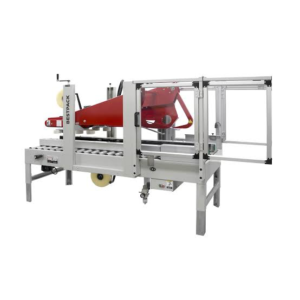



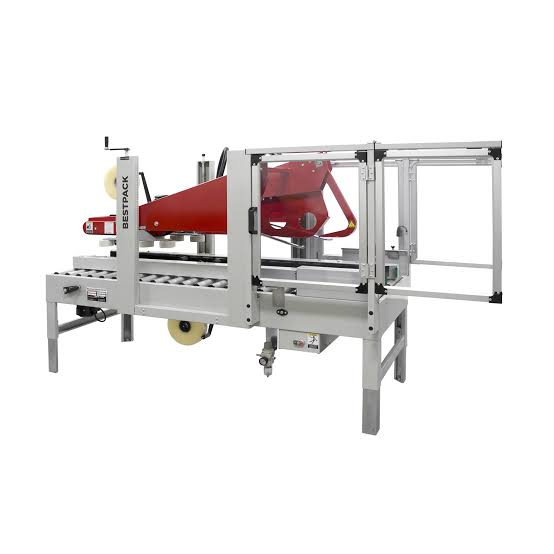
A shipping carton may look secure when it leaves the packaging station, but its performance depends on several mechanical details. Tape placement, conveyor movement, roller pressure, and carton alignment all influence whether the seal remains consistent during handling.
For businesses using Best Pack packaging systems, understanding these relationships helps prevent recurring sealing defects. Instead of treating every damaged carton as a tape problem, operators can examine how the entire sealing process works.
Follow a Carton Through the Sealing Process
Imagine a distribution centre preparing identical cartons for shipment. Each box enters a case sealer, travels between drive belts, passes through a tape application assembly, and exits toward the next handling station.
Several actions must happen correctly.
The belts must move the carton without slipping. Guides must maintain alignment. The tape head must apply adhesive tape smoothly, and its cutting mechanism must separate the tape at the appropriate moment.
If any stage becomes inconsistent, the finished carton may show wrinkles, misplaced tape, or incomplete sealing.
This explains why packaging quality depends on coordinated mechanical performance rather than one individual component.
What Makes Tape Heads So Important?
Tape heads are central to many carton sealing systems because they control tape application and cutting.
The Best Pack packaging parts range includes upper and lower tape heads in different configurations, including two-inch and three-inch options.
Although these assemblies perform similar functions, they are not necessarily interchangeable.
Tape width, mounting dimensions, machine model, and assembly design must match the intended application.
A worn application roller may affect tape contact, while contamination around the cutting mechanism can interfere with consistent operation.
Regular inspection helps operators identify these issues before defective cartons accumulate.
Four Problems That Deserve Investigation
| Observed problem | Possible cause | Inspection priority |
| Cartons move unevenly | Worn or slipping belts | Belt condition and tracking |
| Tape application varies | Roller wear or contamination | Tape head assembly |
| Boxes become misaligned | Incorrect guide adjustment | Carton positioning |
| Machine stops unexpectedly | Sensor or control issue | Electrical and mechanical diagnostics |
These examples are starting points, not definitive diagnoses.
A technician should evaluate the complete operating conditions before deciding which replacement is necessary.
Why Replacement Part Identification Matters
Industrial equipment often contains visually similar components with different technical specifications.
For example, the BestPack parts catalogue identifies the MB22/MBD22-2 belt under reference 2710070. Other belt designs have different dimensions and applications.
Selecting a replacement based only on appearance can create compatibility problems.
When maintaining Best Pack packaging equipment, record the machine model, serial number, and original part reference before ordering.
Also examine whether surrounding components contributed to the failure.
Replacing a worn belt without correcting an alignment problem may lead to repeated damage.
Build Maintenance Around Actual Usage
A packaging machine operating continuously across several shifts experiences different demands from equipment used occasionally.
Maintenance schedules should therefore reflect operating hours, environmental conditions, and manufacturer recommendations.
Useful inspection activities include checking belt tracking, observing carton movement, examining accessible rollers, and reviewing recurring machine faults.
Qualified personnel should perform servicing only after hazardous energy has been properly isolated.
BestPack’s maintenance guidance emphasizes following machine documentation, inspecting relevant components, and using appropriate safety procedures.
Recording completed maintenance also helps teams identify patterns that might otherwise go unnoticed.
Measure Quality Before Increasing Speed
Faster operation is valuable only when finished cartons meet packaging requirements.
Track rejected cartons, tape consumption, unplanned stoppages, and actual production output.
If defects increase after a speed adjustment, investigate whether the equipment remains properly synchronized.
A consistent sealing process can be more useful than a higher theoretical production rate that creates additional rework.
Conclusion: Small Details Shape Every Shipment
Reliable carton sealing begins with attention to the mechanical interactions that customers never see. A correctly aligned conveyor, properly functioning tape head, and consistent inspection routine all contribute to predictable packaging results. Keeping accurate records of machine components helps maintenance teams identify compatible replacements and understand recurring failures. For facilities relying on Best Pack packaging systems, the most valuable improvement may be preventing the next defect rather than simply processing another carton faster. Better observations today can support smoother operations throughout future production runs.