

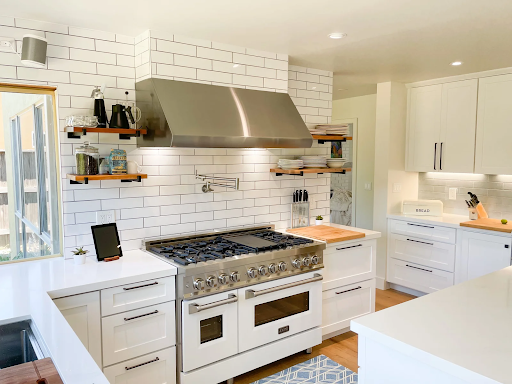
A large cooking appliance changes the practical demands of a kitchen. More burners, wider pans, and built-in griddles can spread cooking vapour across a broad area. Choosing 48-inch range hoods means considering coverage, installation, airflow, and maintenance together rather than assuming that a wider canopy automatically solves every ventilation problem.
Start With the Cooking Appliance
Measure the cooking surface and identify its fuel type, burner arrangement, and clearance requirements. A nominal width does not explain how far the front burners project or where a griddle sits. Those details influence the capture area required above it.
The supplied collection recommends considering a canopy six inches wider than the cooktop where appropriate. This creates three inches of overhang on each side. When assessing 48-inch range hoods, use that as a planning guideline while checking the specific appliance instructions and available space.
Understand the Available Configurations
Wall-Mounted Canopies
These attach above a cooking appliance positioned against a wall. Their chimney covers conceal the duct and electrical connection. Confirm the permitted chimney height range before selecting the final installation position.
Under-Cabinet Models
These occupy the space beneath upper cabinetry. Body height, projection, and duct connections affect whether the appliance fits without cabinet alterations.
Island Assemblies
A ceiling-suspended installation needs suitable structural support and overhead duct routing. Its appearance matters from every direction, but secure mounting and capture performance remain the priorities.
Custom Inserts
The collection includes 46-inch inserts intended for nominal 48-inch decorative enclosures. These are physically smaller than complete canopies because they fit inside a custom shell. Confirm the cutout and depth from the specification drawing.
Comparing 48-inch range hoods therefore begins with installation type, not finish or blower capacity.
Read Blower Ratings in Context
The source collection includes examples rated at 900, 1,100, 1,200, 1,800, and 2,000 cubic feet per minute, alongside variable-capacity configurations. These figures belong to particular products and should not be treated as interchangeable specifications.
A suitable airflow choice depends on cooking intensity, capture depth, mounting height, and duct resistance. Frequent high-heat cooking creates different demands from occasional use. Ask an installer to assess the complete system rather than selecting the highest number available.
For 48-inch range hoods, multiple speeds provide useful flexibility. Everyday cooking may need less extraction than searing or using several burners simultaneously. Compare sound information at the settings you expect to use regularly.
Resolve Ducting Before Ordering
Check the selected model’s outlet dimensions, permitted discharge direction, and installation instructions. Existing ductwork should not automatically be reused simply because it is connected to an older appliance.
The most useful questions include:
- Where will extracted air terminate outdoors?
- Does the model support the planned discharge direction?
- Can the route avoid unnecessary bends?
- Will framing or other services obstruct the duct?
- Are replacement-air provisions required?
High-capacity exhaust can affect pressure balance inside a home. Ask the installer and local building authority about applicable make-up air requirements before construction begins.
Separate Indoor and Outdoor Suitability
The collection identifies both indoor 430 stainless-steel products and specific 304 outdoor-rated variants. Stainless steel alone does not establish that an appliance is approved for outdoor installation. Verify the complete product rating and permitted environment.
This distinction matters when comparing 48-inch range hoods for covered grill areas. A household cooking appliance and an outdoor grill can have different heat, grease, and clearance requirements. Select equipment for the actual application rather than appearance alone.
Plan Maintenance Access
Filters must remain removable after installation. Decorative trim, cabinetry, or nearby shelving should not obstruct their removal. Check cleaning instructions, lighting replacement, control access, and spare-part availability before committing.
Some models in the collection accept optional charcoal-filter accessories for recirculating operation. Compatibility is model-specific. Recirculation returns filtered air to the room and does not exhaust moisture outdoors, so it should not be confused with ducted ventilation.
Complete a Practical Handover
Share the specification drawing with everyone handling cabinetry, electrical work, and installation. After fitting, test each speed and light, investigate unexpected vibration, and confirm that the outdoor damper operates correctly.
Keep the manual and installation records together. Suitable maintenance helps 48-inch range hoods retain the performance established during commissioning, while clear records simplify later servicing.
Conclusion
A successful installation combines appropriate coverage, realistic airflow choices, compatible ducting, safe mounting, and accessible cleaning. Homeowners comparing range hoods should evaluate those requirements before narrowing the choice by appearance or price. Measure the complete arrangement and resolve installation questions before placing an order.