
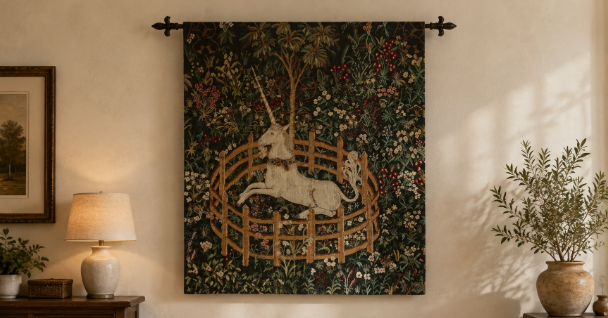
Home décor becomes more meaningful when it reflects personal interests, memories, and creative preferences. While ready-made artwork can complement an interior, personalised textile art offers an opportunity to create something that feels genuinely unique. Designing a custom tapestry allows people to choose imagery, colours, patterns, and dimensions that suit a particular space or occasion. If you want to make your own tapestry, understanding the design process can help turn an idea into a practical piece of decorative wall art.
What Is a Custom Tapestry?
A custom tapestry is a textile wall decoration created around a specific design or concept. Instead of selecting an existing pattern, the customer can provide or develop artwork intended for reproduction on fabric.
Custom tapestries can feature photographs, illustrations, artwork, patterns, typography, landscapes, abstract compositions, or other creative concepts. This flexibility makes them suitable for bedrooms, living areas, offices, children’s spaces, studios, and other interiors.
The finished piece can also be designed around the available wall space. Rather than trying to find artwork that happens to fit a particular area, a custom design can be planned with the room’s dimensions in mind.
Start With a Clear Design Concept
The first step when you make your own tapestry is deciding what you want the finished piece to communicate. A clear concept can make decisions about imagery, colours, and composition much easier.
Consider the room where the tapestry will be displayed and the atmosphere you want to create. A bedroom might suit calming landscapes or soft patterns, while a creative workspace could accommodate bold colours and abstract artwork.
Personal interests can also provide inspiration. Favourite places, hobbies, animals, nature, photographs, or artistic styles can all become starting points for a custom design.
Choosing the Right Image
The quality of the source artwork can have a significant effect on the finished textile. High-resolution images are generally preferable because they provide more detail when reproduced at a larger size.
When using photographs, choose images that are sharp and well composed. For illustrations or digital artwork, make sure the file is suitable for the intended dimensions.
It is also important to consider how the image will appear when enlarged. Small details that look attractive on a computer screen may become less noticeable or less defined when transferred to a large textile.
Selecting Colours Carefully
Colour is one of the most noticeable aspects of a custom tapestry. The chosen palette should work with the room while still allowing the artwork to stand out.
A neutral interior can accommodate stronger colours, while an already colourful room may benefit from a more restrained design. Complementary colours can create harmony, while contrasting shades can produce a more dramatic focal point.
It is helpful to consider the surrounding walls, furniture, flooring, curtains, and decorative accessories before finalising the palette.
Thinking About Size and Placement
Dimensions should be considered early in the design process. A custom textile that is too small may lose its visual impact, while one that is too large could overwhelm the surrounding décor.
Measure the wall where the tapestry will be installed and consider the furniture positioned beneath or around it. Leaving some breathing room around the artwork can help maintain visual balance.
Placement also affects how the design is perceived. A horizontally oriented design may work well above a sofa or bed, while a vertical composition may suit a narrow wall or tall architectural space.
Creating a Balanced Composition
When you make your own tapestry, the composition should be considered as carefully as the individual elements. A visually appealing design usually has a clear focal point and enough surrounding space to prevent it from feeling crowded.
If text is included, its size and placement should make it easy to read from an appropriate distance. Multiple images should also have enough separation to avoid competing for attention.
Conclusion
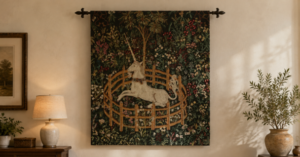
Creating personalised textile art allows homeowners to combine creativity with practical interior design. Whether the concept is inspired by nature, personal memories, favourite characters, or imaginative themes, a custom tapestry can become a distinctive part of a room. A playful idea such as a unicorn tapestry can be especially suitable for creating a personalised decorative piece for children’s rooms or fantasy-inspired spaces.