

Packaging plays an important role in protecting products during storage, transportation, and distribution. As businesses handle larger production volumes, they increasingly need packaging processes that deliver consistency without creating unnecessary delays. Shrink wrapping offers a practical approach by using heat-sensitive film to create a close-fitting protective layer around products or grouped items. When properly selected and integrated into a production line, shrink wrap packaging can improve product presentation, handling, and protection while supporting more organized packaging workflows.
Protect Products During Handling and Transportation
One of the primary purposes of shrink wrapping is to keep products securely contained. A properly applied film can help hold individual products or multiple items together, reducing the likelihood of products shifting during movement.
This can be especially useful for manufacturers, distributors, retailers, and warehouses that frequently move packaged goods. A secure outer layer may also help protect products from dust, dirt, and routine handling conditions. Depending on the film and application, shrink wrapping can provide an additional layer of protection without significantly increasing the overall package size.
For businesses shipping products through multiple stages of distribution, maintaining a stable package can make handling and storage more manageable.
Improve Packaging Consistency
Manual packaging processes can produce variations in film tension, sealing, and overall appearance. Automated or semi-automated equipment can help create more consistent results by controlling important stages of the wrapping process.
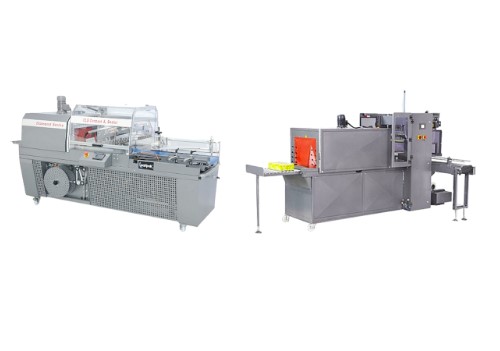
Modern systems may combine sealing and shrinking operations or integrate conveyors, feeding systems, and heat tunnels into a broader production line. This allows products to move through packaging stages in a structured sequence rather than relying entirely on manual handling.
Consistency matters not only for appearance but also for operational efficiency. When packaging conditions remain stable, businesses can establish repeatable procedures and make it easier for operators to monitor production quality.
Select Equipment Based on Production Requirements
Choosing appropriate equipment is an important part of developing an efficient packaging operation. Businesses should consider factors such as product dimensions, package configuration, required production volume, available workspace, film type, and desired automation level.
Smaller operations may benefit from manual or semi-automatic equipment, while high-volume facilities may require fully automatic systems capable of integrating with other machinery. Equipment should also be evaluated according to maintenance requirements, controls, safety features, and the availability of technical support.
A well-matched system can help prevent common problems associated with unsuitable equipment, including inconsistent seals, excessive film use, production bottlenecks, and unnecessary downtime.
Integrate Heat Control and Automation
Heat plays a critical role in the shrinking process. Once the product is sealed with suitable film, controlled heat causes the material to contract around the package. Consistent temperature management is therefore essential for achieving a professional and reliable finish.
Modern heat shrink tunnels are designed to provide controlled heating and consistent shrinkage. Some systems are developed for applications across industries such as e-commerce, commercial laundry, and insulation wrapping.
Automation can further improve the process by coordinating product movement, sealing, shrinking, and discharge. When these stages work together, operators can reduce repetitive manual tasks while creating a more predictable production flow.
Consider the Complete Packaging Workflow
An effective packaging strategy should look beyond the wrapping machine itself. Businesses should evaluate how products enter the packaging line, how they are positioned, where sealing occurs, how heat is applied, and how finished packages are discharged.
This broader approach can reveal opportunities to improve efficiency at several points in the process. For example, automated feeding or product alignment may help prepare products before wrapping, while conveyor systems can transport completed packages toward inspection or shipping areas.
Ultimately, shrink wrap packaging works best when the equipment, film, product characteristics, and production requirements are considered together. The right combination can help businesses achieve dependable results while creating a packaging process that is easier to manage and scale.
Build a More Reliable Packaging Strategy
As packaging requirements continue to evolve, businesses need systems that balance protection, consistency, efficiency, and flexibility. At the conclusion of the equipment selection process, we at Maripak USA focus on helping businesses develop effective packaging workflows with our range of shrink-wrapping and packaging equipment. Shrink wrapping can support these objectives when the appropriate equipment and operating methods are selected. The key is to match the packaging approach to the specific products and production environment rather than relying on a one-size-fits-all solution.